Firstly, I should apologies for not posting for a while, work has been crazy busy. I have been out bird watching frequently enough and happily got my bird species list for the year up to 204 (a new record for me) but not really had the time to photograph or write.
Looking ahead to January I plan to do a monthly post on the wildlife in Menstrie Woods. I thought it would be nice to follow one place through the year and see what this reveals. Of course I will also be posting about trips further afield too.
On Thursday a good birding friend and I had a day visiting Burntisland in Fife and Esk Mouth at Musselburgh and took a few pictures so thought I would share a quick post on that.

We had hoped to see a Black-Necked Grebe at Burntisland but there was no sign only Little Grebe and two distant Slavonian Grebes visible through the scope. However this Grey Seal was exploring the inner harbour and kept popping up to take a look at us.
More of note we had scope views of Black-Throated, Red-Throated and Great Northern Divers. The GND was a year tick for me. With my more experienced friend pointing out the differences I am getting better at identifying these birds at distance. The Red-Throated Diver normally raises it’s bill into the air which is quite a reliable sign. The Great-Northern is very different, a larger bird with a massive bill and steep forehead. I was happy as a three diver day isn’t that common for me.
We spent a bit of time looking for the Humpback Whale which has been in the Forth the last few days but soon gave up and drove around to Musselburgh. We arrived just before high-tide which is ideal as it pushes the tidal feeding birds up against the shore or they fly into the nearby scrapes.
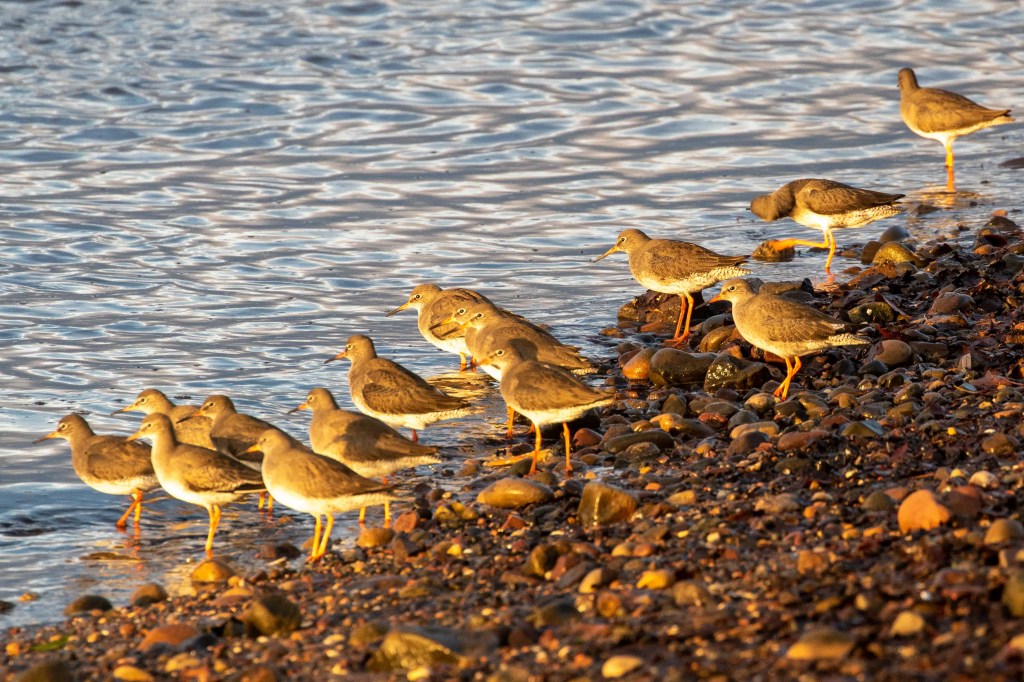
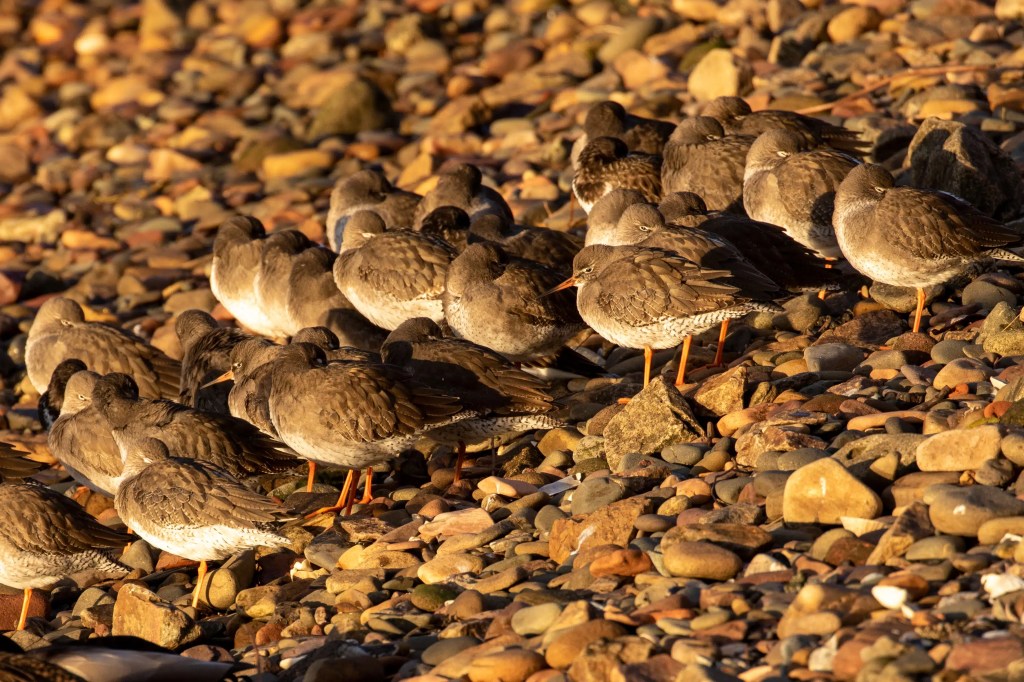
As soon as we got out of the car we noticed a small flock of Redshank waiting for the tide to retreat so they could feed. The winter sunlight gave them a warm look.
Half a dozen Turnstones were feeding around the Redshanks and living up to their name on occasion.

We walked out as far as the first bench which overlooks the sea wall and got our scopes out. Our target for the day would require us to search through the Scoter flocks in the distance. Scoters are mostly black, sea ducks which are seen in quite large numbers around Scottish coasts each winter. The two common birds are the Common Scoter all black with a largely black bill and the Velvet Scoter which has a more yellow bill and a small white tick below the eye (the male that is). At Musselburgh it is the Velvet which is the more common ironically. However, two much rarer birds can be seen here each winter. The Surf Scoter has a larger yellow bill and the drake has a large white patch on the back of the neck. But the mega rare American White-Winged Scoter has been here the last few years too. This has a smaller pinkish bill (compared to Velvet) and a white tick that significantly goes above the eye. I have never seen this bird despite trying about 5 times and was keen to add it to my life list before it vanishes altogether.
Some careful scope work did find the White-Winged Scoter albeit rather poor distant views. We also had slightly better views of the Surf Scoter too. Both were far too distant for photos.
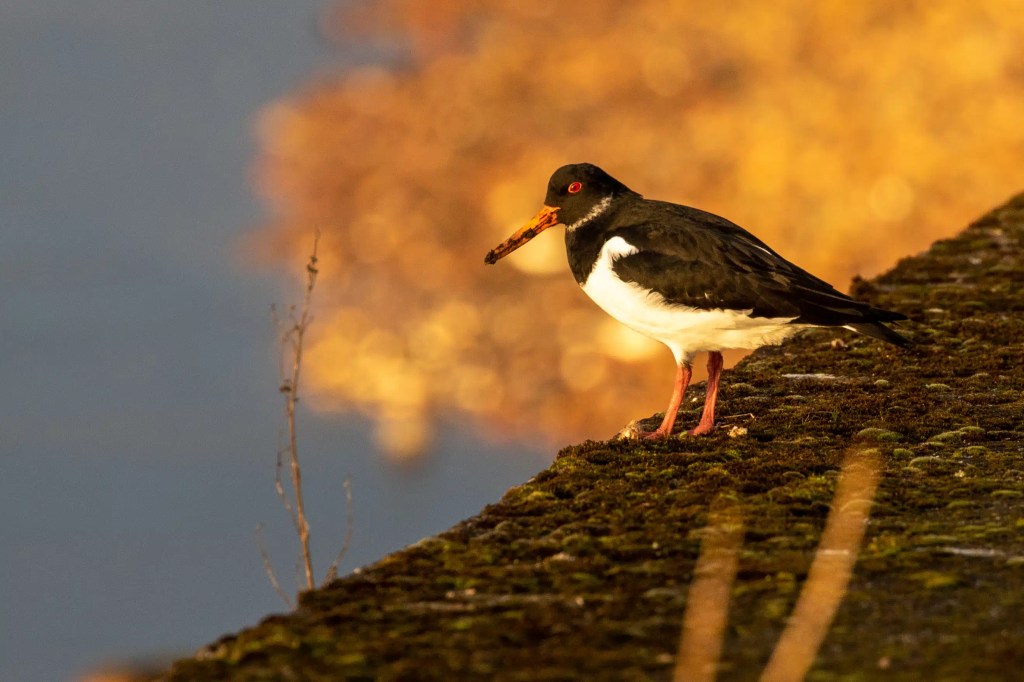
Mission accomplished we walked back to the river mouth. A single Oystercatcher rested on the seawall.
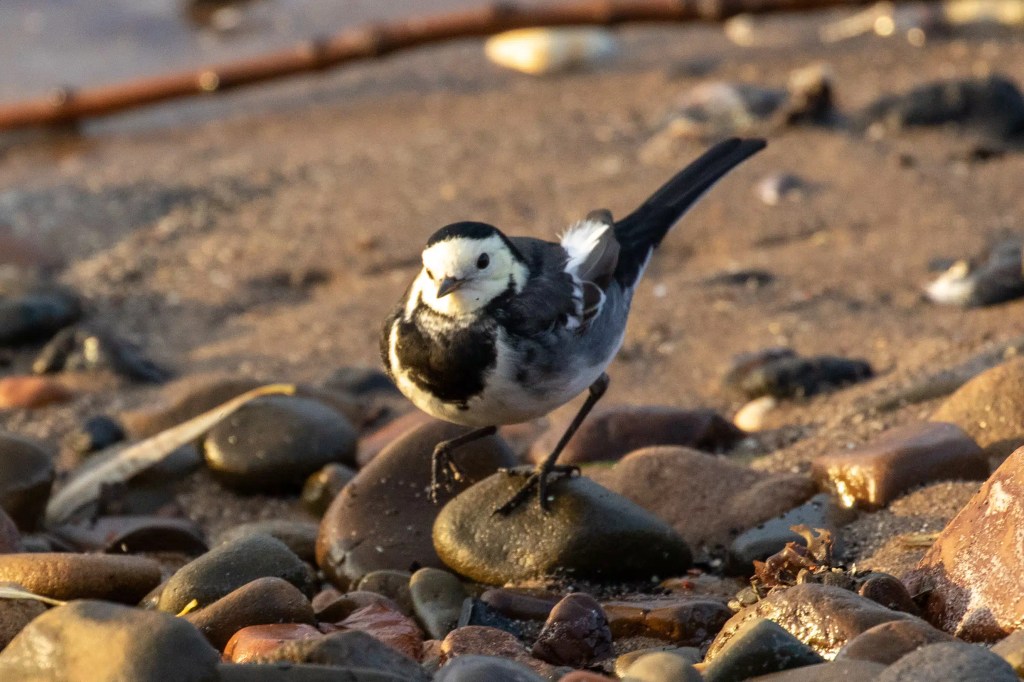

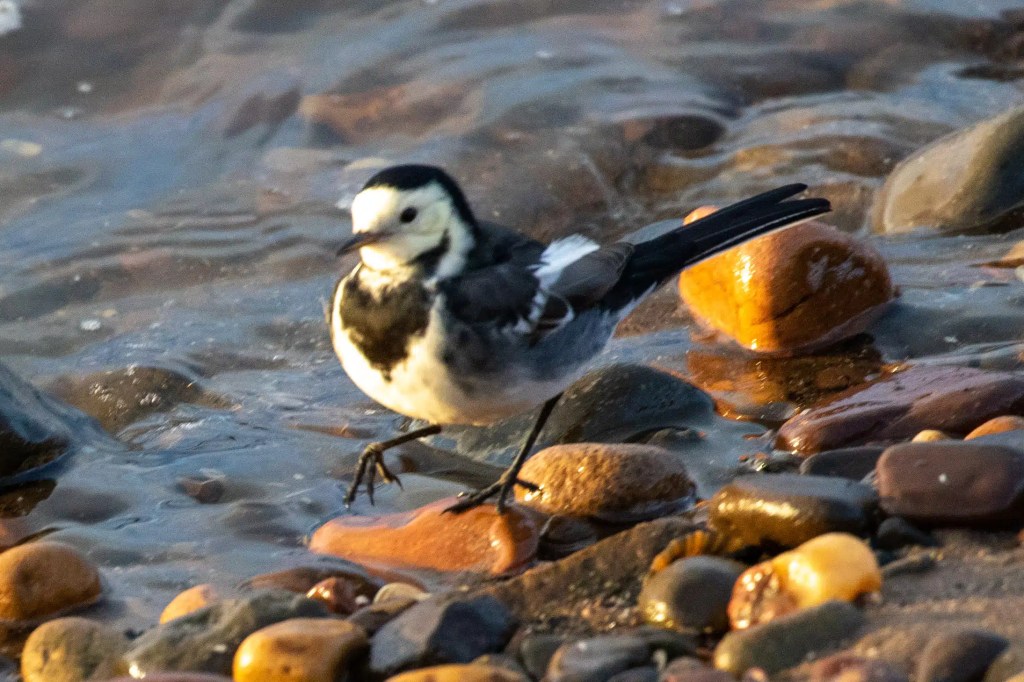
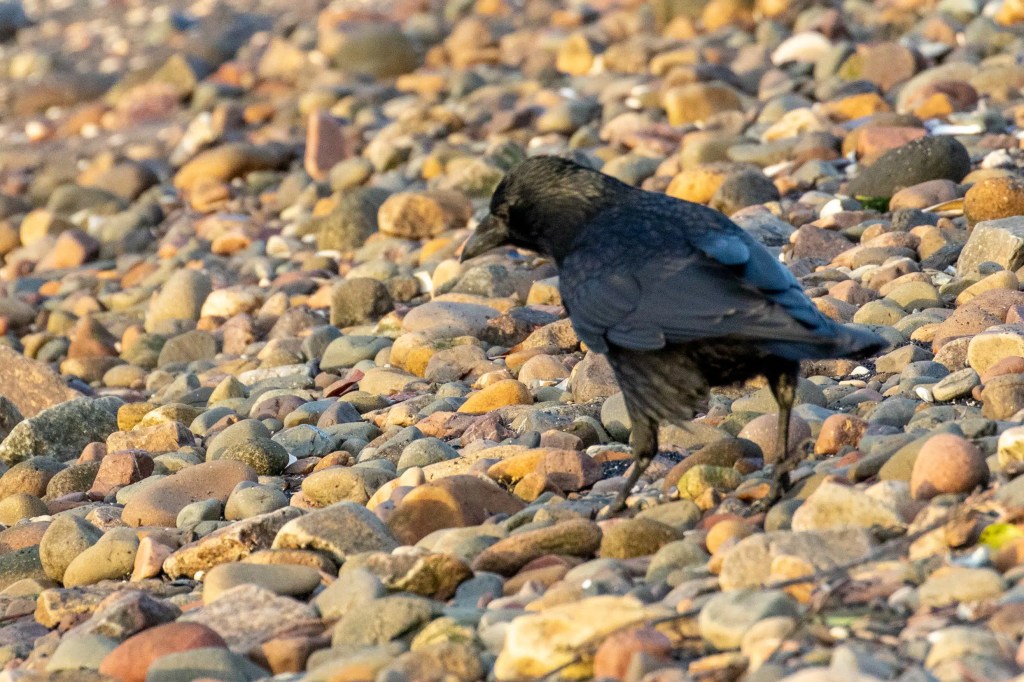
A Pied Wagtail flitted around the beach. This always strikes me as an active little bird, searching for insects as it works along the shore. A Carrion Crow flew in and inspected the breach.
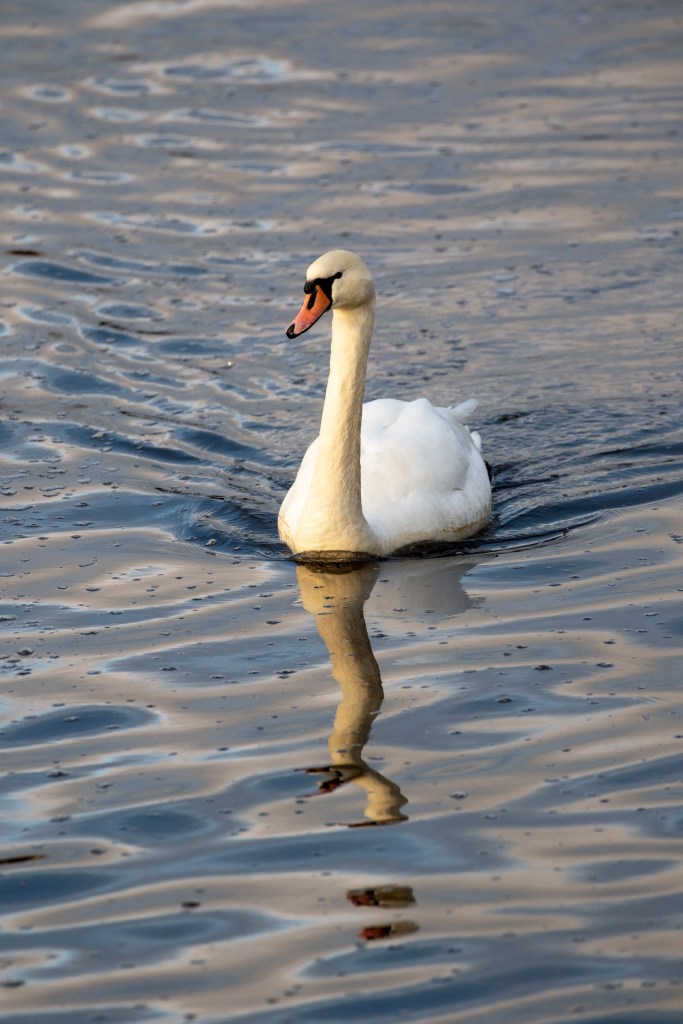

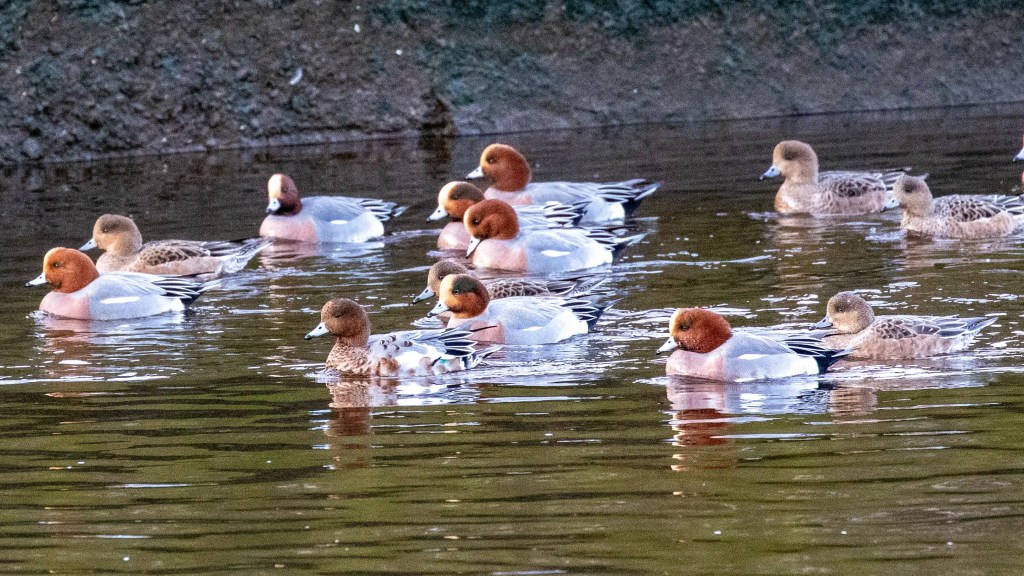
There were several Mute Swans in the river looking gracious in the generous winter light. And on the other side of the river a large flock of Wigeon were swimming upstream. The males have the bold buff yellow stripe down the centre of the head with chestnut brown heads and grey backs. The females are simpler more cryptic colours as in most ducks.
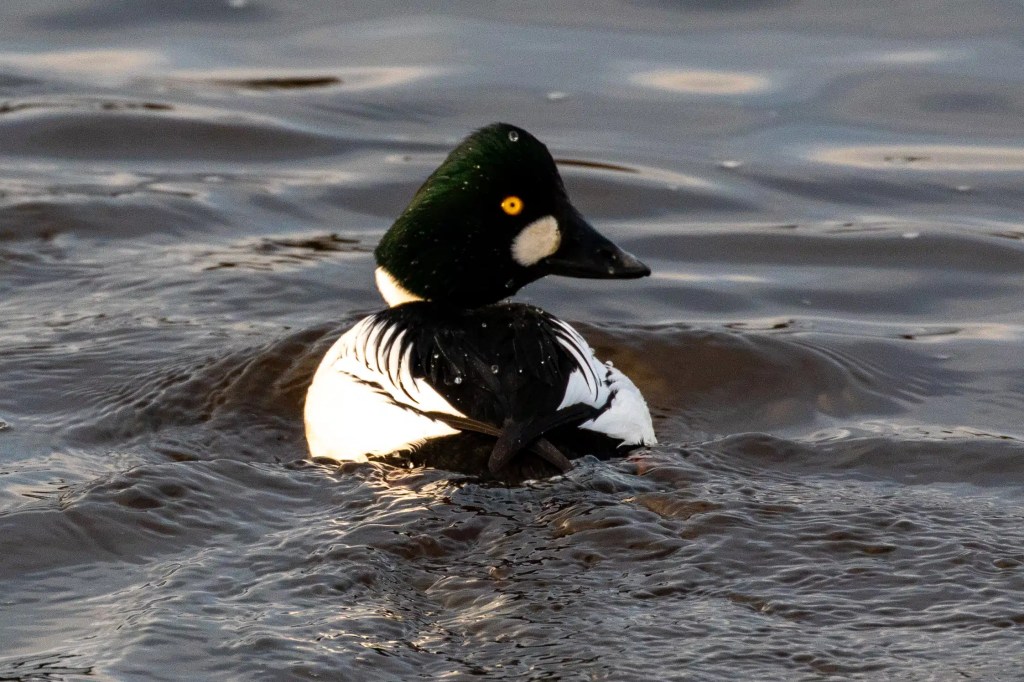
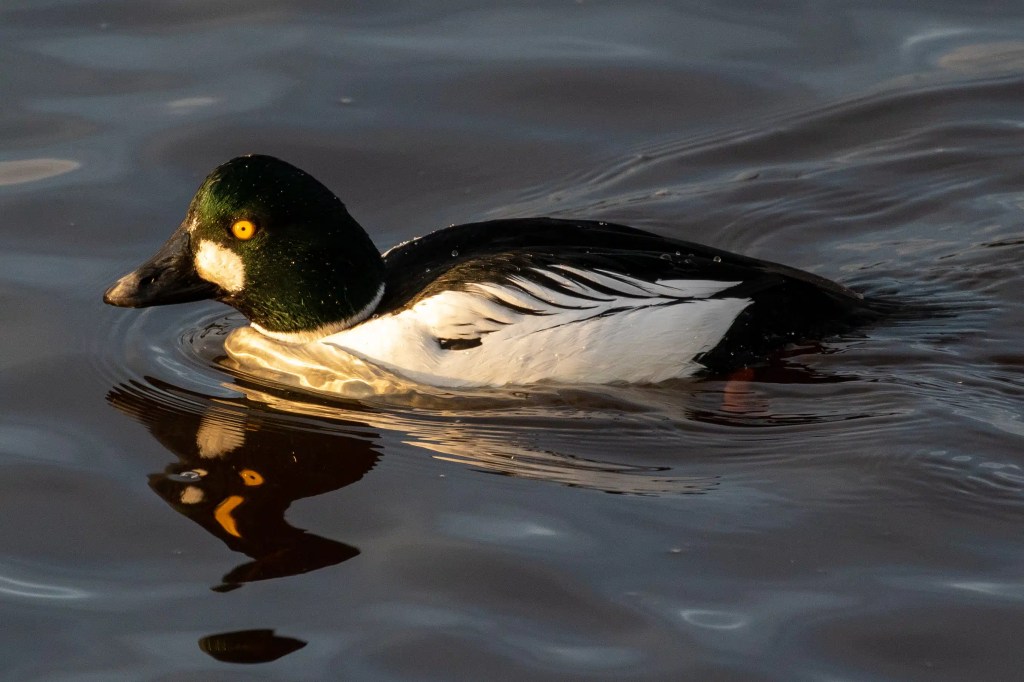
Another winter duck which always catches my eye is the Goldeneye and there was a large number in the river. The male has a black-green head with a bold white spot on the cheek and pied black/white back and sides. The female is attractive too but with a browner head and planer back. Oh and they both have a bright golden eye of course.


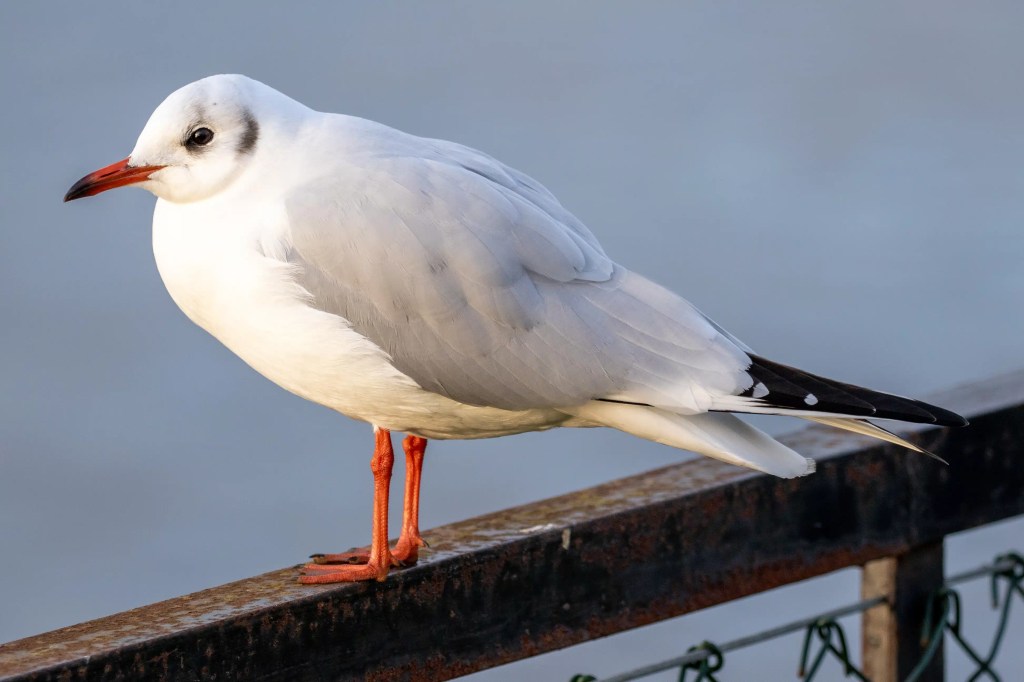
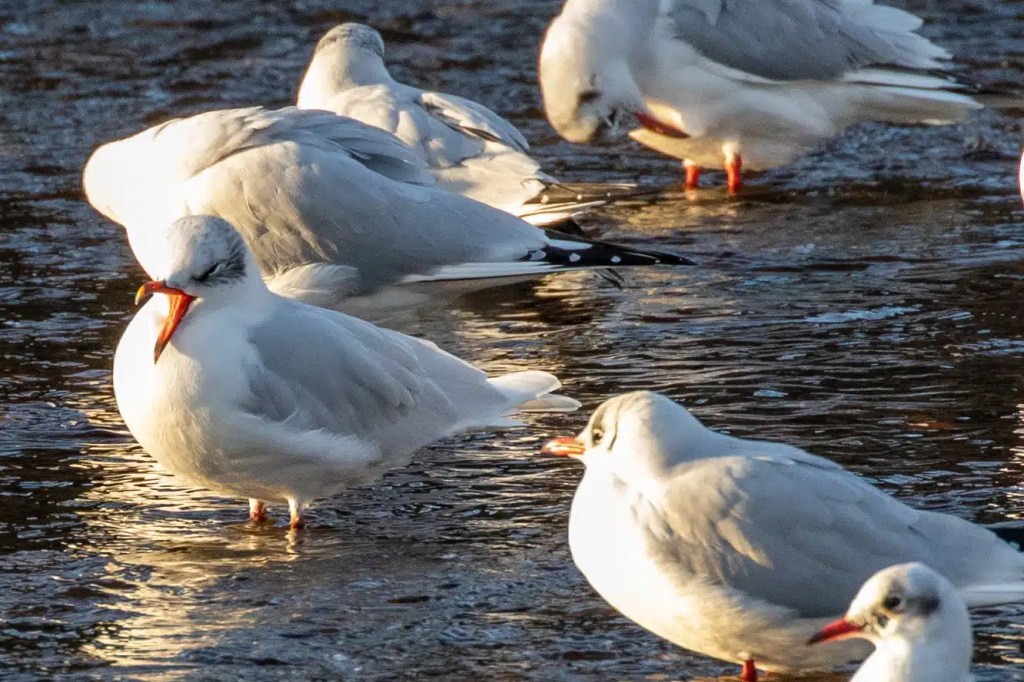
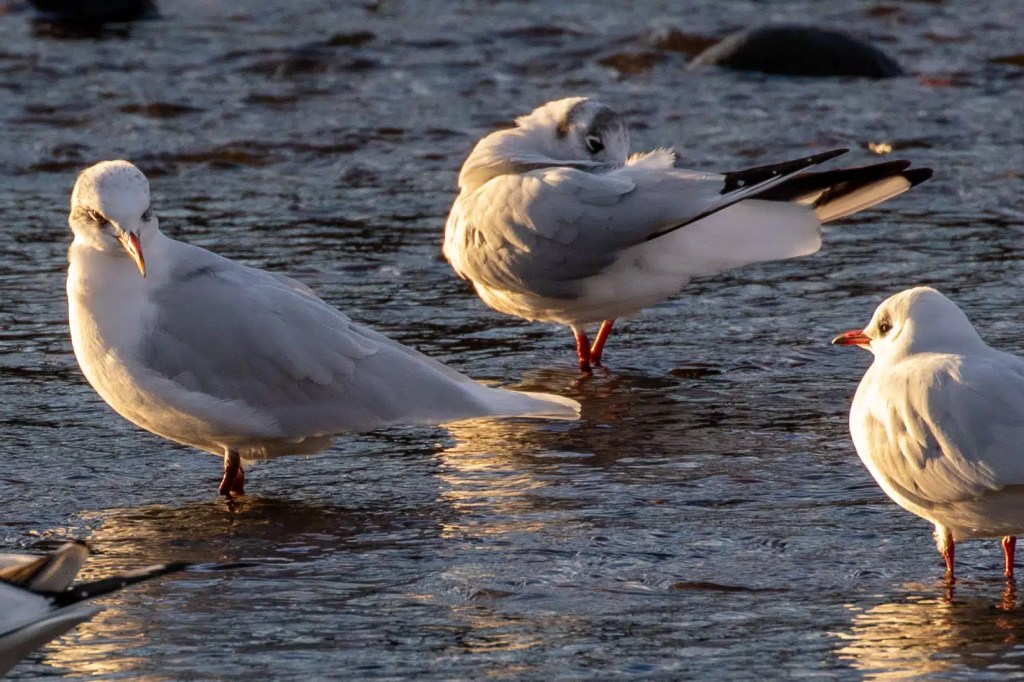
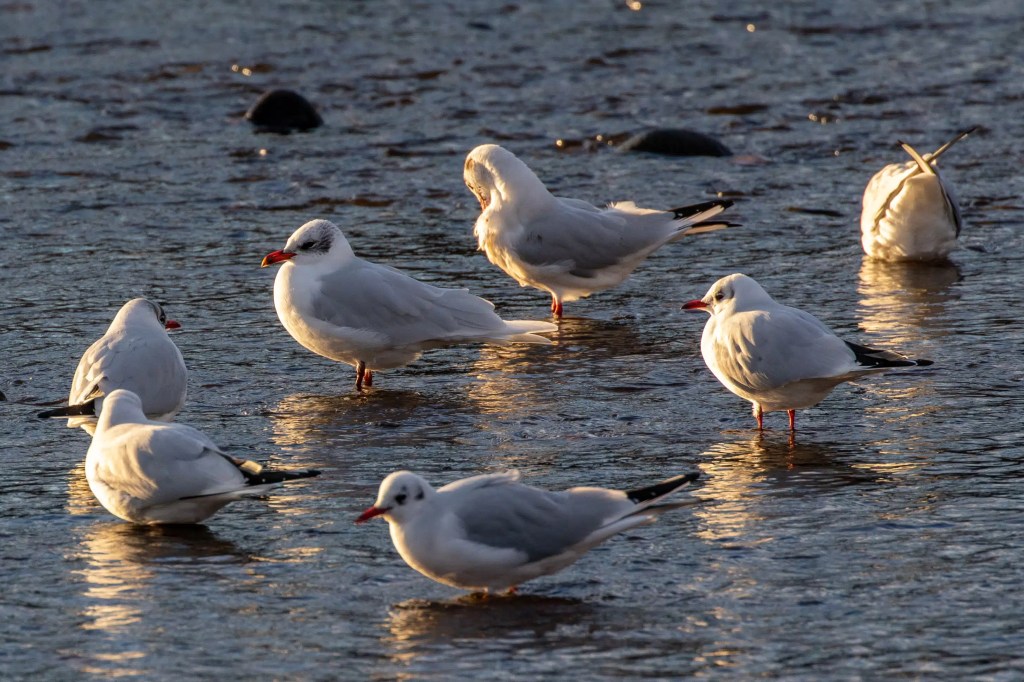
A large flock of Black-Headed Gulls were roosting on a gravel bank island. A Black-Headed Gull has black wingtips as shown below from this one on the harbour wall. It also has a thin bill with a black tip. Oh and in winter it doesn’t have a black-head only a comma behind the eye.
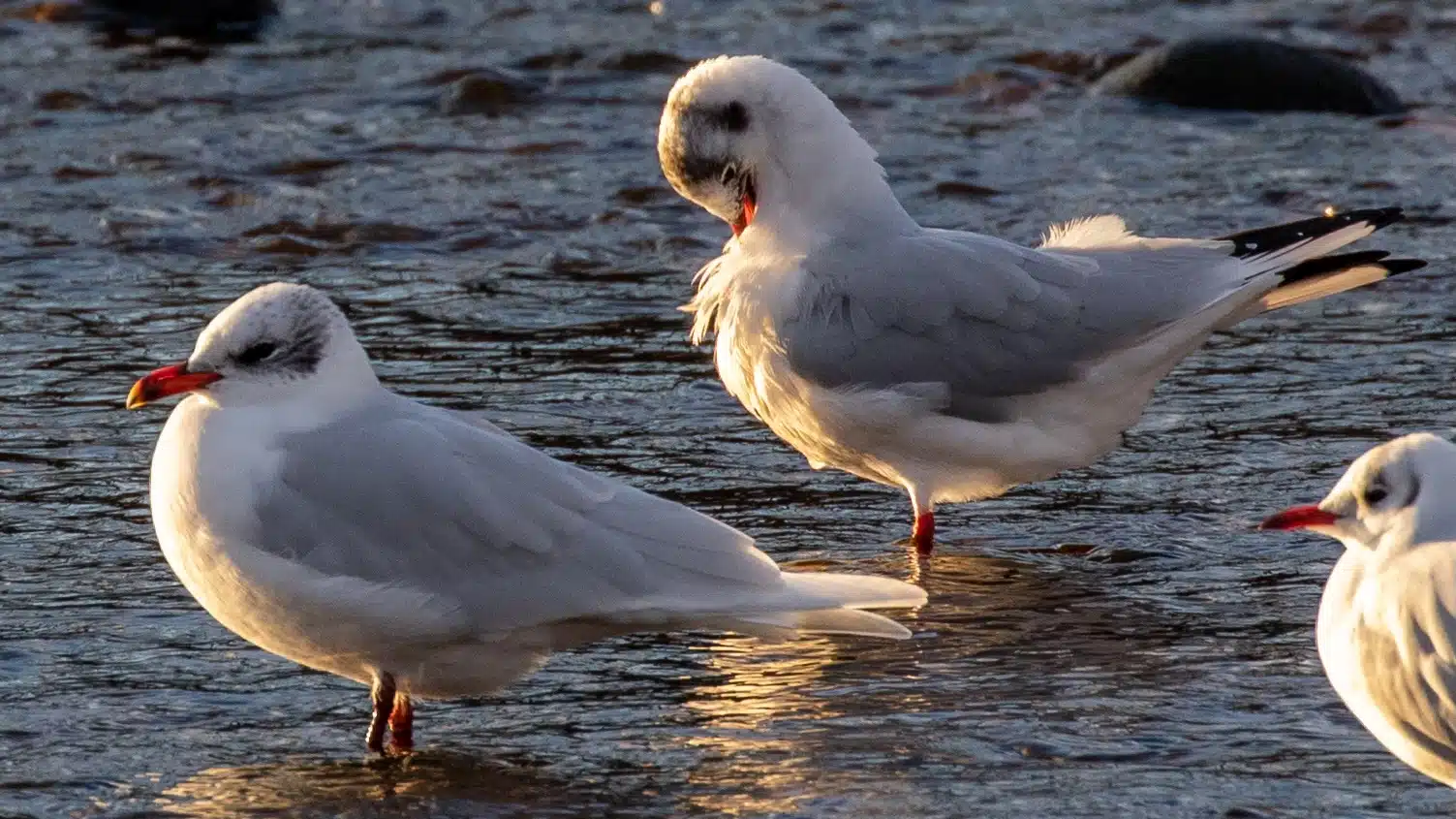
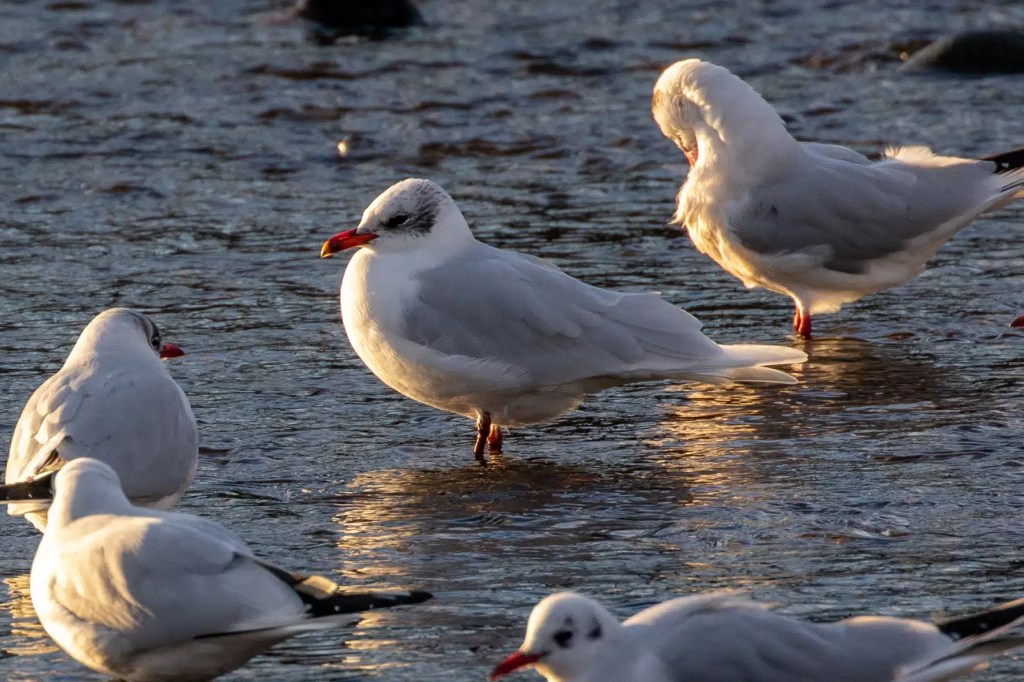
Where there is a large flock of gulls it is always worth scanning for a rarer gull and recently I saw a Mediterranean Gull here. Searching through a gull flock isn’t for everybody. Gulls have a fantastic array of plumages as birds take 2-4 years to achieve full adult plumage which does complicate matters. Here we were looking for the tell-tale all white wing-tips and also a much thicker bill. Sure enough a great Med Gull was preening and when you knew what to look for, it really stood out.
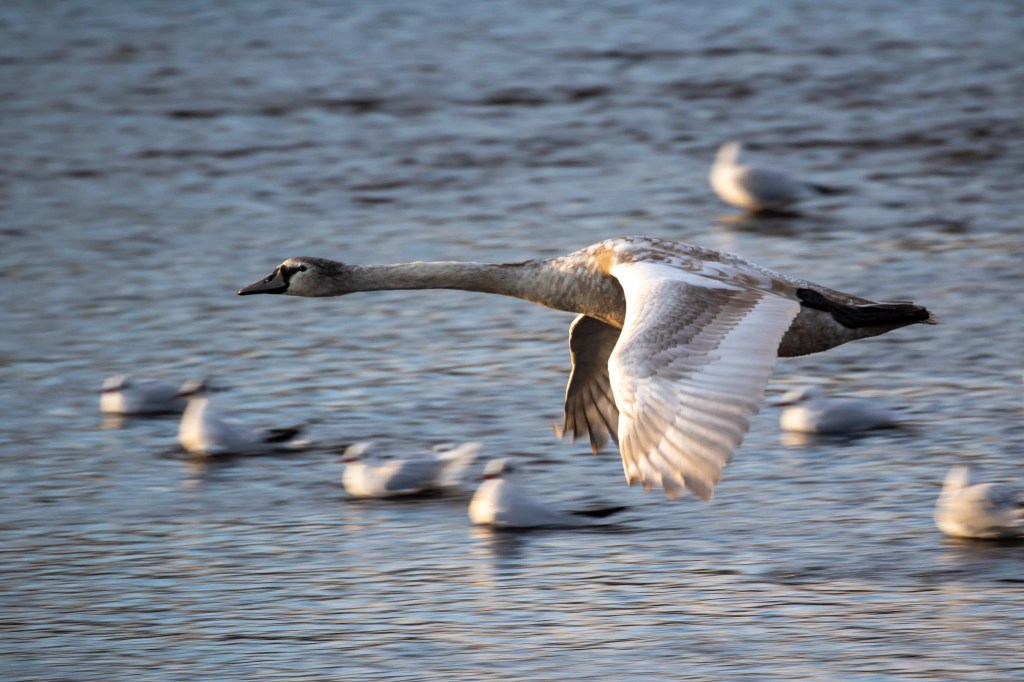
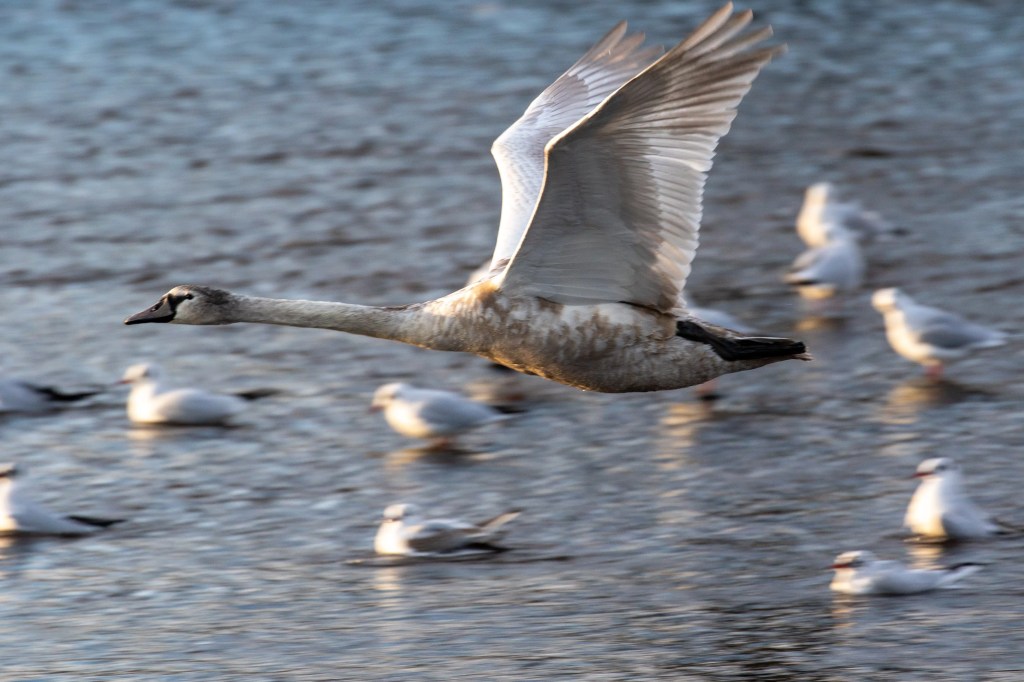
We were about to leave when the sound of air rushing over the wings of a first winter Mute Swan flying up river gave me enough warning to capture a final couple of photos.

Discover more from WildScot Photography
Subscribe to get the latest posts sent to your email.
Great variety and lovely photos. Feeling slightly jealous and would love to have seen the humpback whale too!