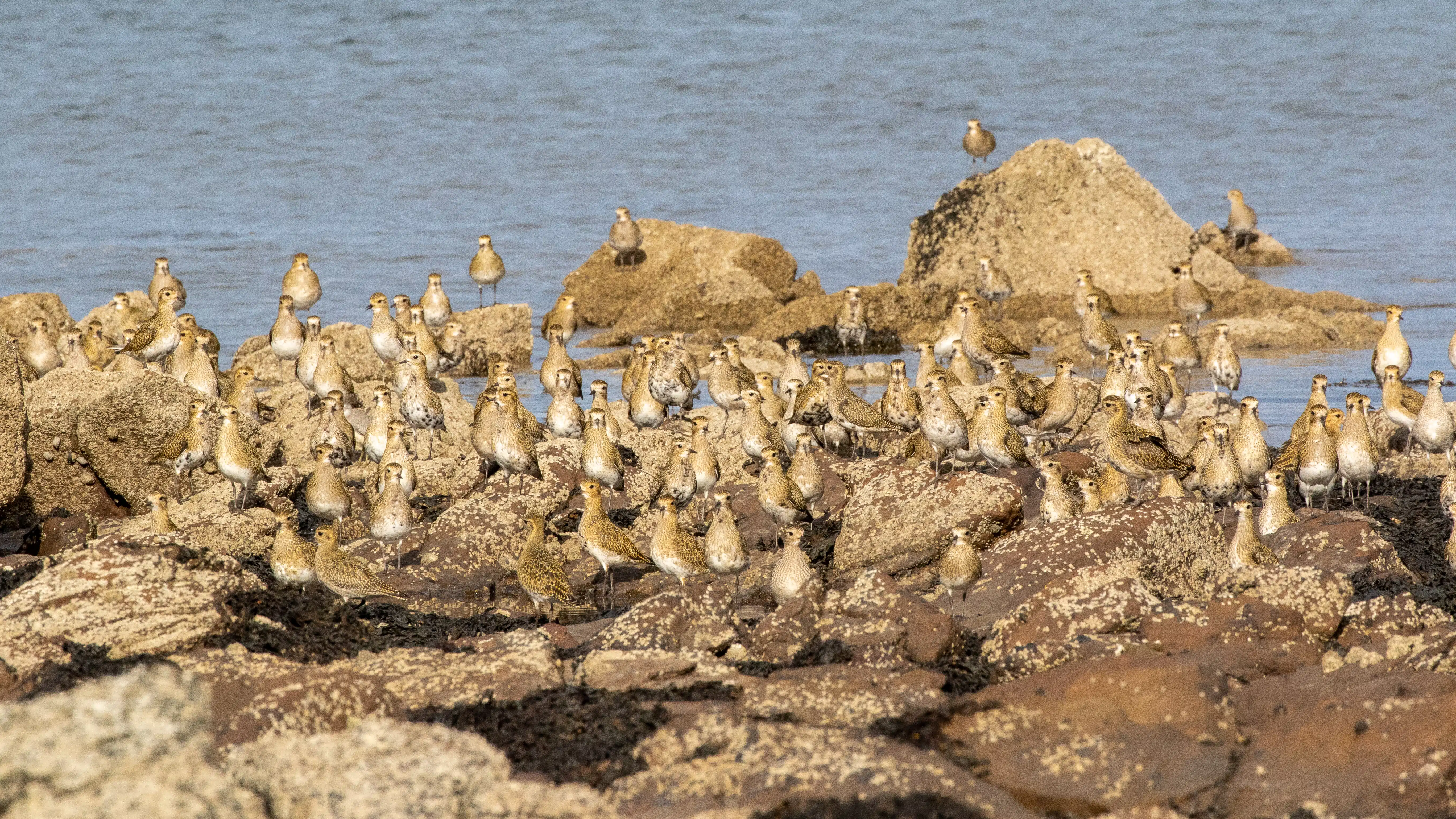
We recently took a drive along the Lothian coast from Musselburgh to Gullane. There are several good spots to stop and look out to sea and along the coast itself.
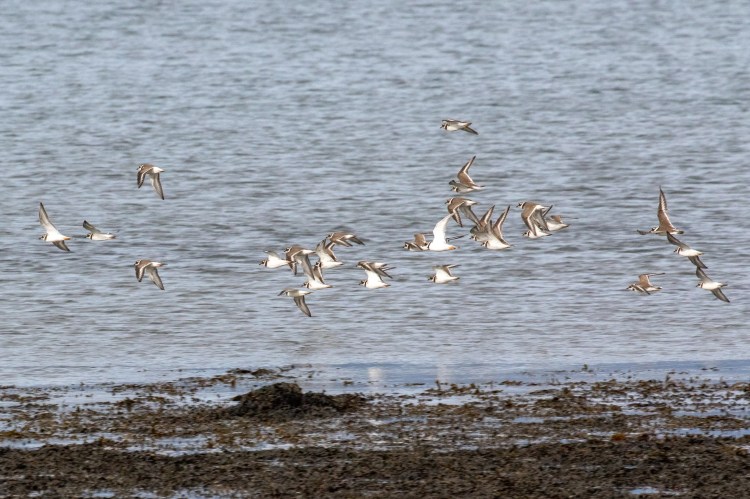
At Port Seton, a large flock on Ringed Plover flew down the coast but didn’t stop.
But then an even larger flock of Golden Plover was hard to miss as their golden backs caught the afternoon sun.
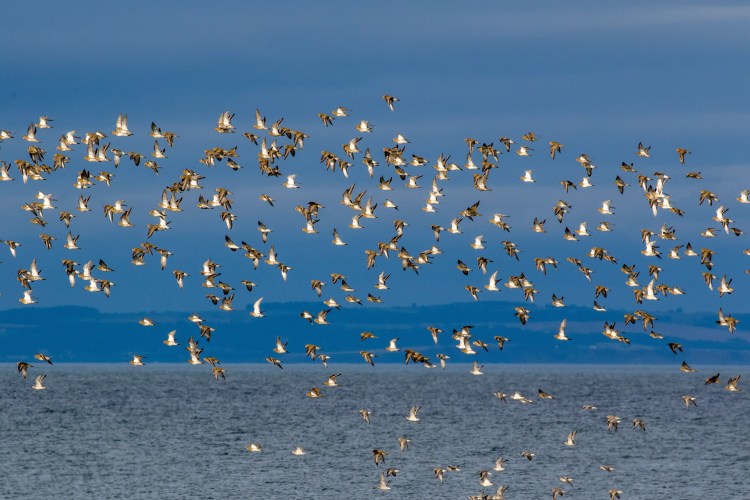
We watched them swirling for several minutes before they chose a patch of nearby rocks to settle on.
Over time other smaller flocks kept coming in to join them and before long there were three to four hundred basking in the sun.
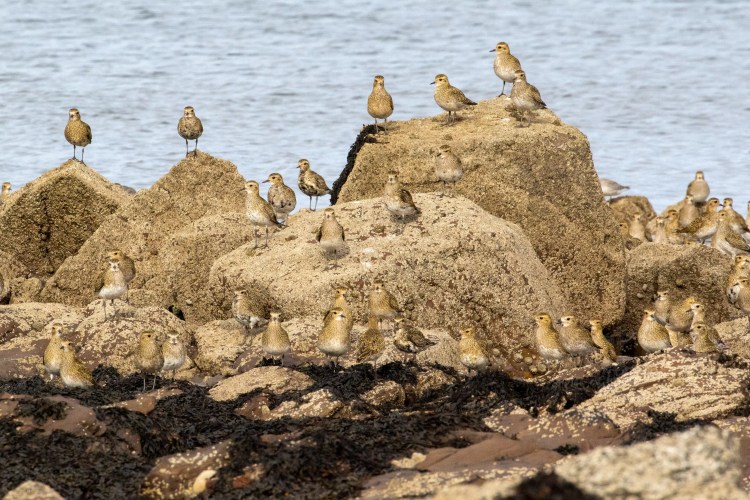
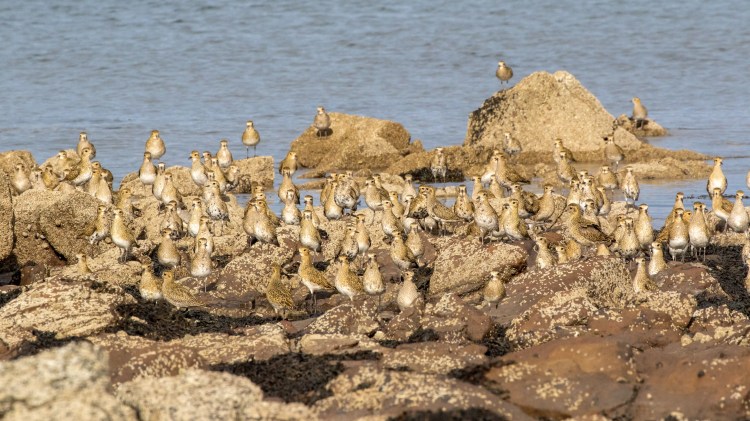


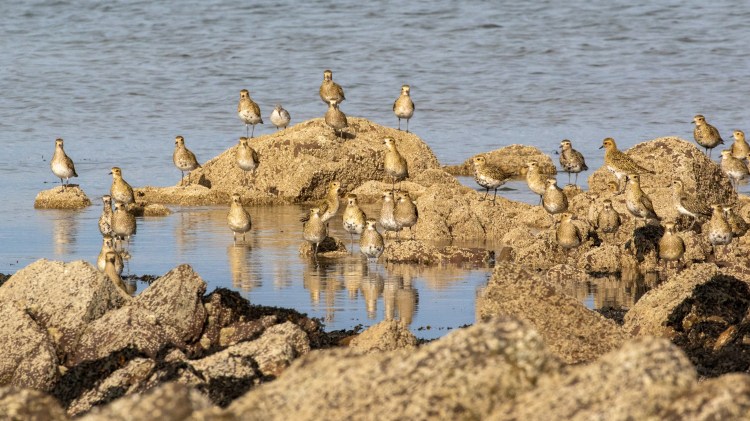
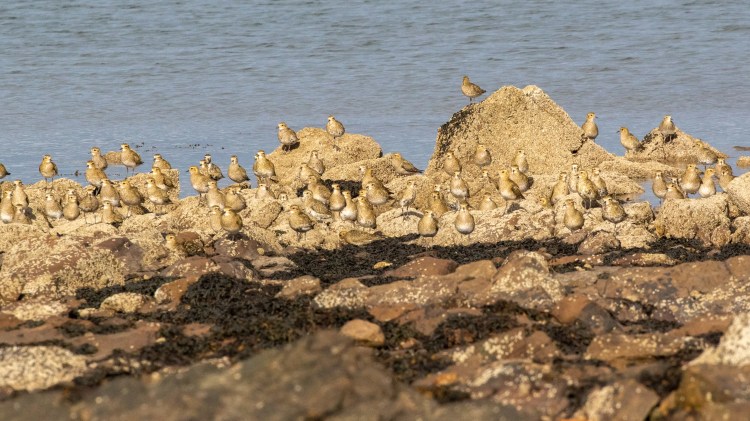
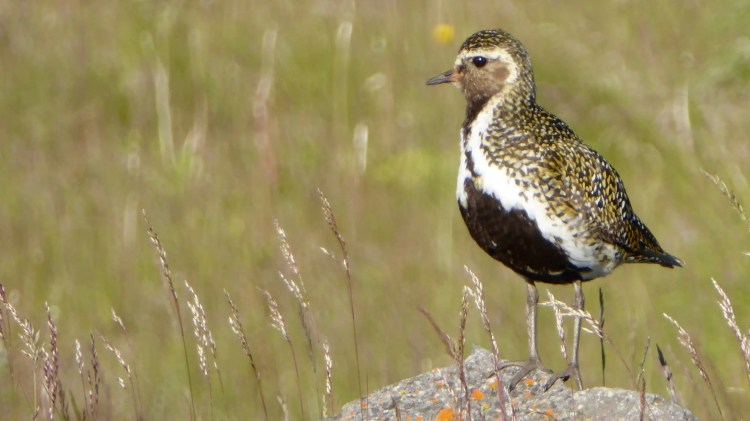
These are beautiful birds. I vividly remember seeing them in full breading plumage in Iceland and they looked amazing with their black, white and gold colours. A few of the birds here had hints of the black bellies remaining.
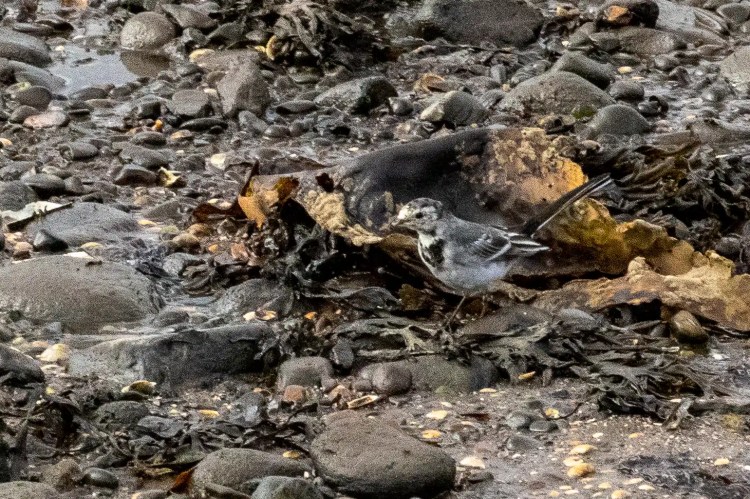
A rather tatty Pied Wagtail approached us on the beach.
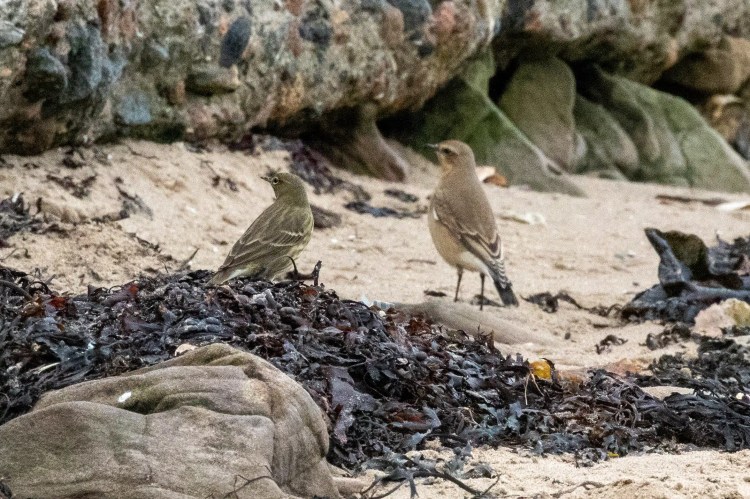
A migrating Wheatear had obviously stopped for a few days and it flew past landing by a rock and was soon flushed out an indignant (likely resident) Rock Pipit. The Pipit seemed quite clear that this was its patch of sand and seaweed and the Wheatear wasn’t welcome. The Wheatear would fly away only for the Pipit to follow, perhaps the Wheatear would have to carry on to Africa before it would have peace?
For some time I had noticed a white bird picking through the tide line along the beach and I had assumed it was just a gull. Something about its’ movements wasn’t quite right and I looked at it through my binoculars.

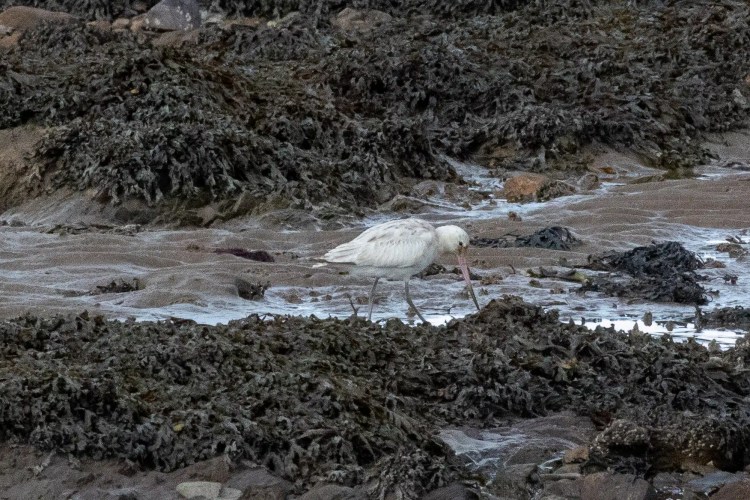
It took me a while to work out what this bird was as I had never seen anything like it before. Once I ignored the fact that this bird was all white/off-white it was obvious from its shape and structure and indeed its behaviour that it was a Bar-Tailed Godwit. I named it a Bar-Tailed ‘Odwit’ as Godwits were not meant to be white! This was an example of leucism, a genetic condition a bit like albinism.
This experience really highlights the dangers of relying on colours and plumage in identifying birds. Most people look for colour and plumage pattern to identify birds but it is much more reliable to go for size, shape (bill, legs especially), behaviour, song and calls, and habitat first. Relying on colour often leads to whole classes of birds (waders, warblers and gulls for example) becoming almost impossible to identify. Most waders are brownish and gulls are whitish so how to tell one from the other? And Warblers are the classic LBJ (little brown job) so identification becomes close to impossible. However, start to rely on size, shape, behaviour, song and calls and you will begin to see these birds aren’t that similar at all, and you can start learning the differences.
Looking back to the Golden Plovers I saw some other birds had joined them, a small group of Knot. This often happens, when large numbers of birds gather, others join them – in nature there is safety in numbers and that is no truer than when at the coast.

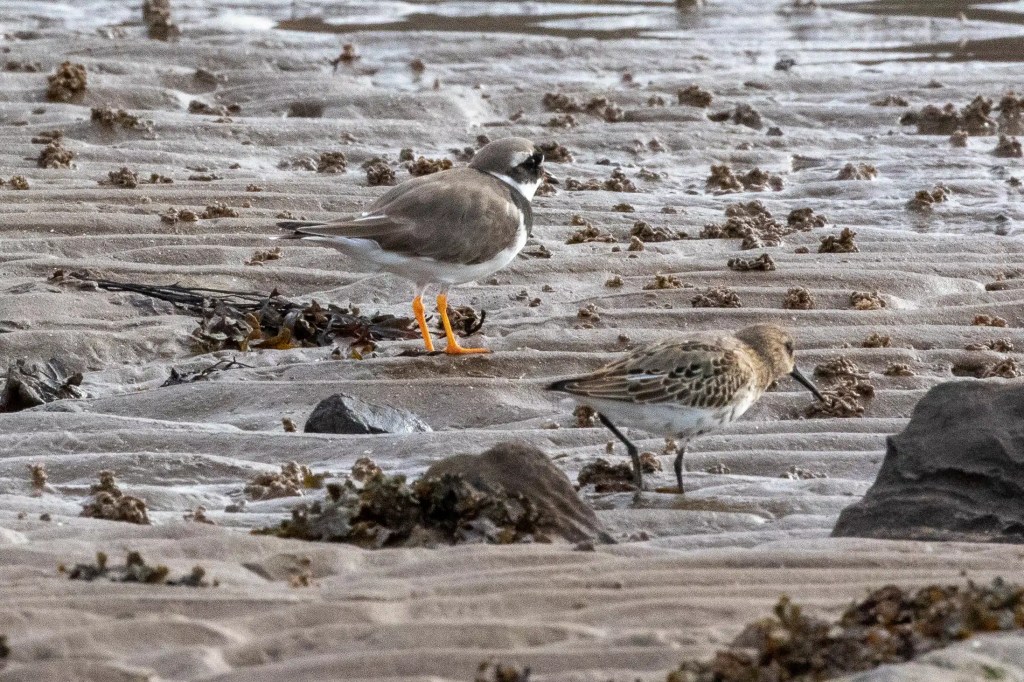
As I walked further along the beach I notices a couple of birds. One was a Dunlin and the other a Ringed Plover. The Ringed Plover with bright orange legs, smooth brown back and black/white face. The Dunlin, a first winter bird with a combination of scalloped juvenile plumage and greyer plainer adult winter plumage.
We returned to the car and carried on up the coast towards Gullane stopping again at Aberlady Bay. The tide was out and the first thing we noticed were the Geese. Hundreds of Pink-Feet and Greylags feeding on the mud and bathing in the river.
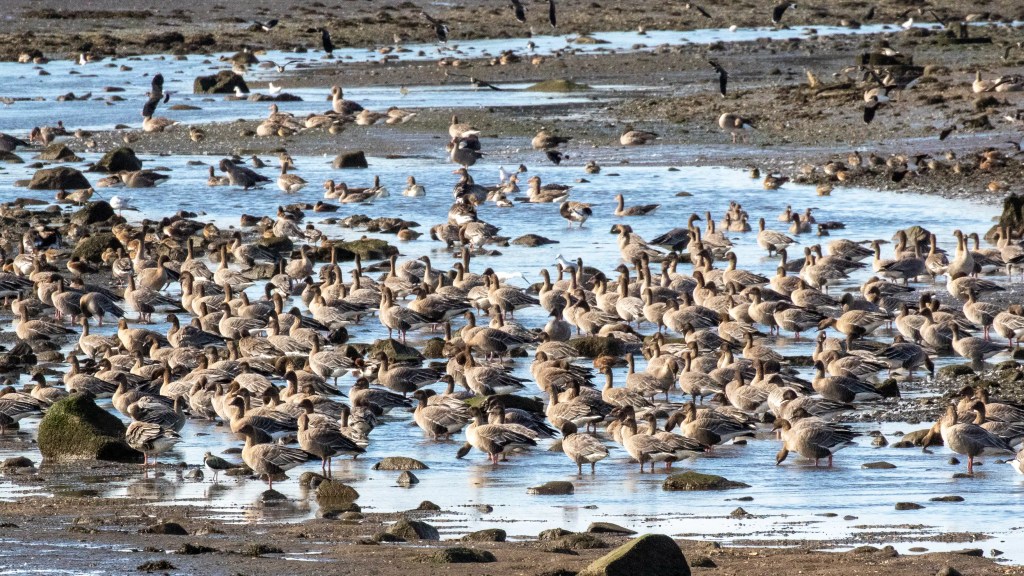
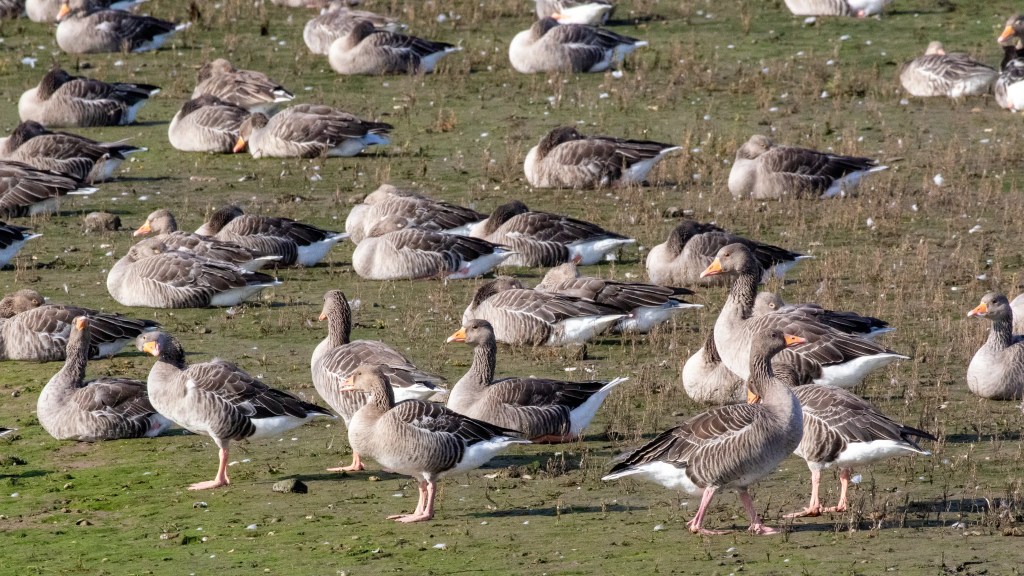
Pink-Footed Geese are clearly wild geese migrating here for the winter from Iceland. Greylags are less clear, with a strong population of resident so-called “plastic” geese (ie not of wild origins) being supplemented by additional winter migrants.
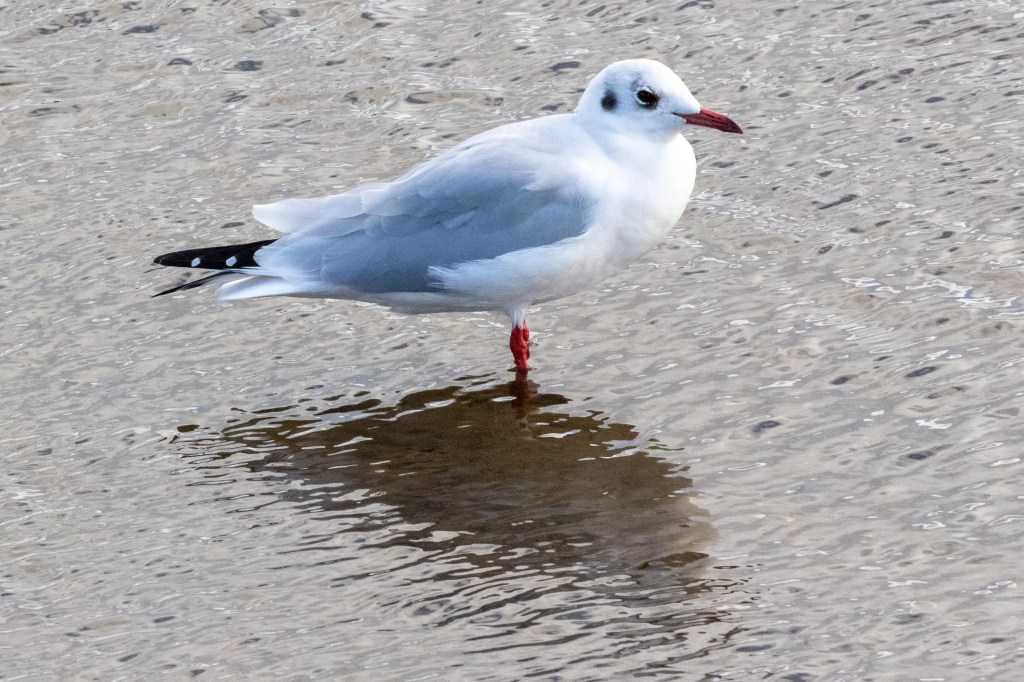
A Black-headed Gull allowed close views from the bridge. Only the black spot behind the eye now, in its winter plumage rather than the full black (well brown) cap after which it is named.
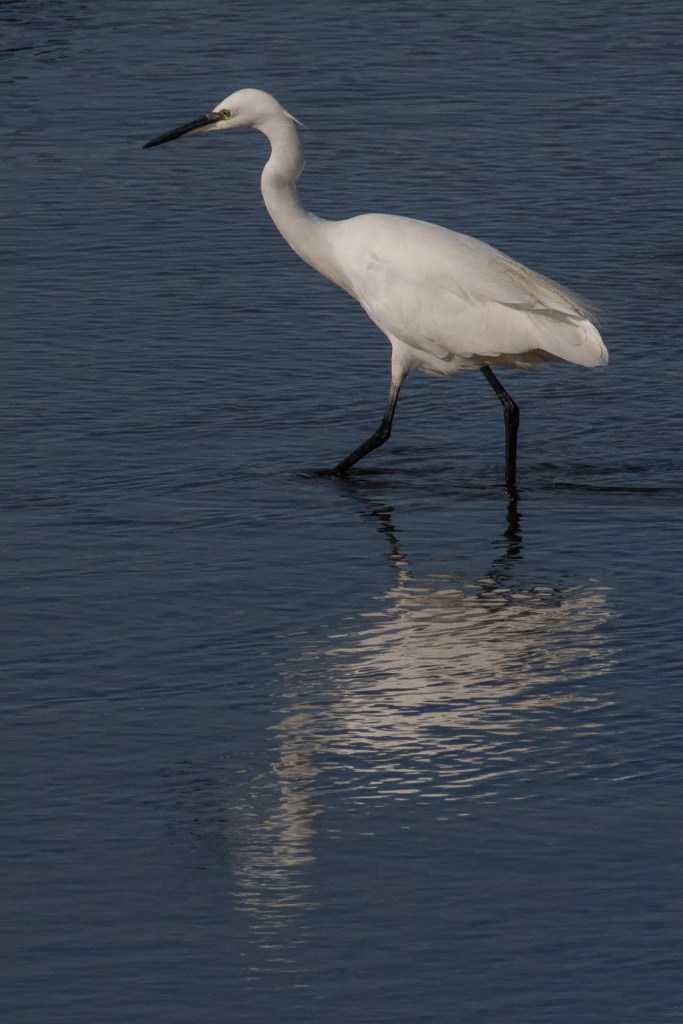
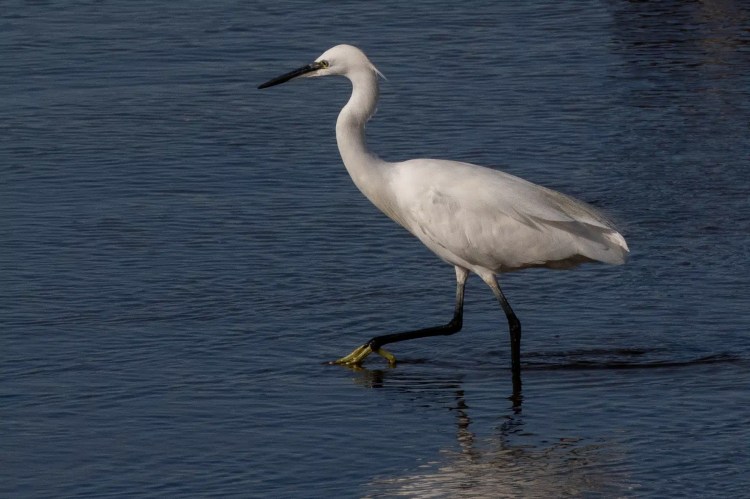
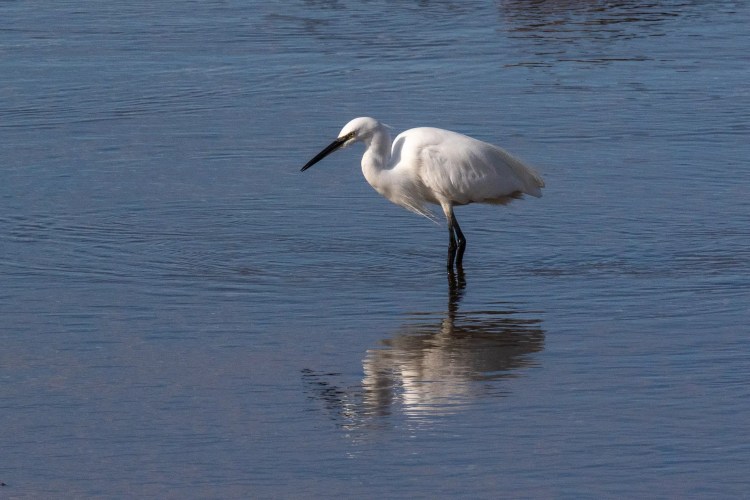
Several Little Egrets hunted the river bed. This bird would have been a rarity a couple of decades ago but now, thanks to climate change, they are resident in the UK all year and increasingly common in Scotland. Egrets are from the same family as Herons but are all or mostly white. The Little Egret can be told from the rarer Great White Egret by its smaller size and dark black beak and legs. The even rarer Cattle Egret is still unusual in Scotland and has a yellow bill and rather different behaviours. All are very elegant birds.

Discover more from WildScot Photography
Subscribe to get the latest posts sent to your email.
Lovely write up -thanks.