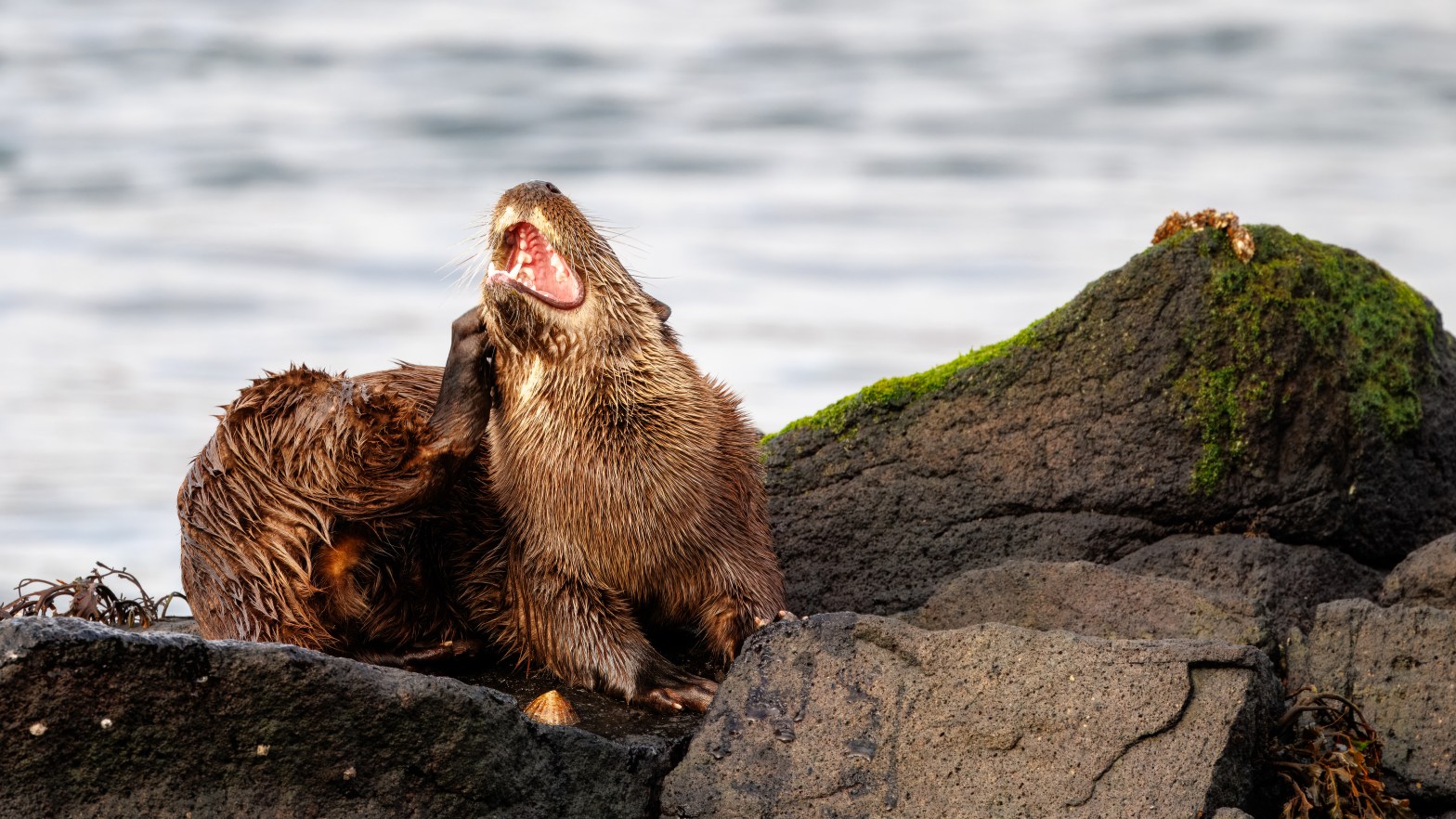
The Eurasian Otter (Lutra Lutra) is one of Scotland’s most sought after and elusive wildlife subjects. Photographing them is thrilling. And the Isle of Mull is one of the best places to try.
I’ve spent years photographing Otters here. I know the behaviour, the locations, and how to get amazing shots, and to do so ethically.
This is my ultimate guide to photographing Otters on Mull. I hope you find it helpful.
Why Photographing Otters on Mull is amazing
The Isle of Mull on Scotland’s west coast is one of the best places to photograph Otters in the UK. Mull has a rich coastline. Sheltered sea lochs and kelp beds create the perfect habitat. Otters are more active here than in many other UK locations. Their density is higher too (about one Otter per mile of coastline).
The scenery is also breathtaking providing lovely atmospheric backdrops. On a misty morning or during a golden sunset it is absolute magic. Even in wind and rain you can capture great shots.
Another great location to photograph Otters in Scotland is Jura where this photo was taken.
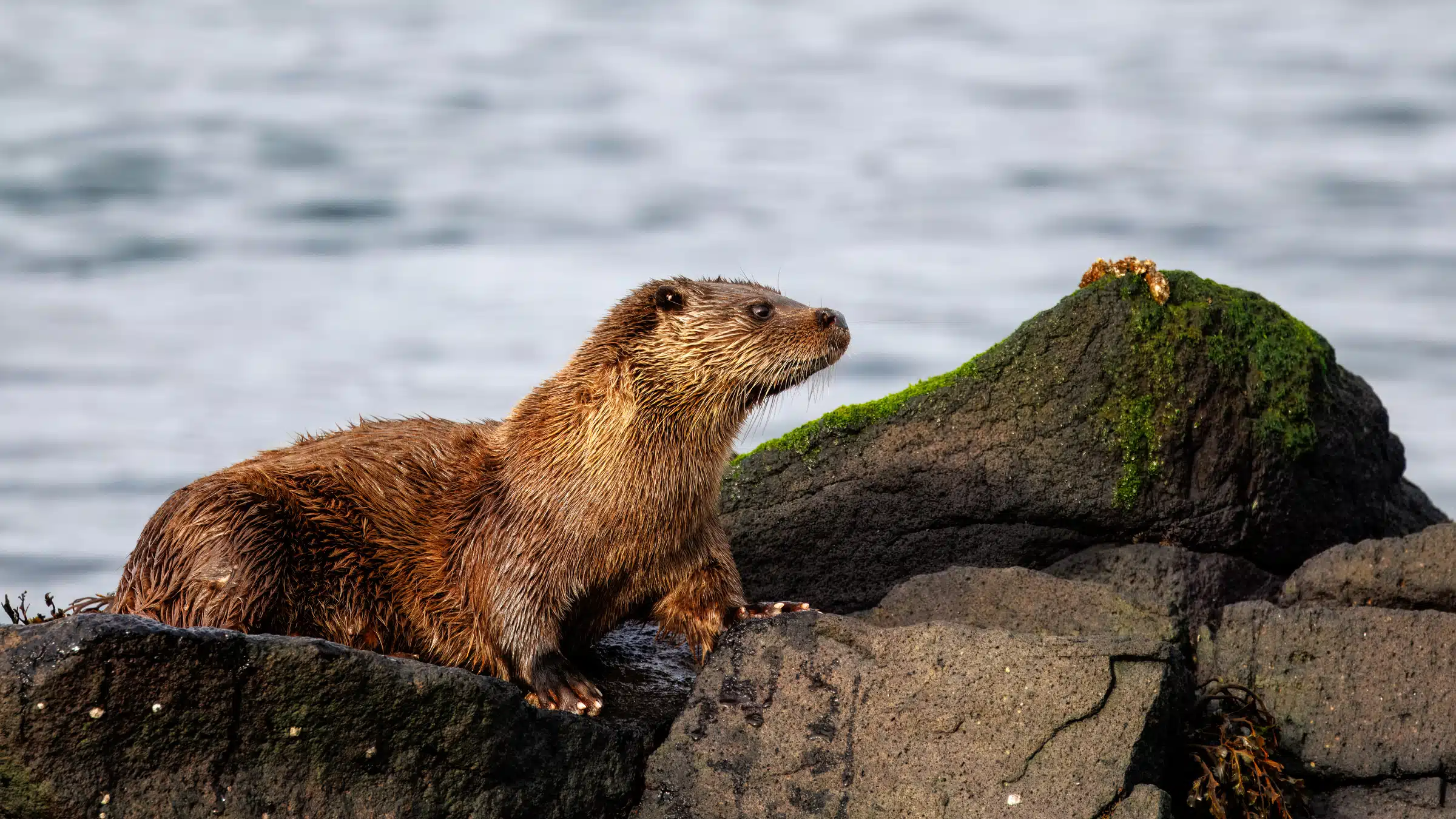
Best time of year for photographing Otters on Mull
You can photograph Otters on Mull all year round.
But, the island is much busier in the summer and during school holidays. This can make sustained views of Otters much more difficult to get. It also creates conflict for parking places (for example) or with tourists stopping when they see what you are photographing. For this reason I prefer to photograph Otters on Mull from September to March.
If you are on the island in Summer, I would recommend taking a walk along the coast away from roads. This way if you find an Otter you will have it to yourself. Summer also means longer daylight hours. So another choice is to get up very early (think 4 am). Patrol the roads before the masses have had their cornflakes and you can often have a great and sustained sighting.
In winter the days are shorter. Dawn and dusk occur at easier times. Winter also brings more dramatic light and weather conditions. Most importantly, fewer people visit the island. It is easier to park and enjoy a sustained Otter sighting by yourself.
Factors impacting Otter photography?
Some people will tell you that Otters are most active at dawn and dusk. This is certainly true on rivers and freshwater lakes in Scotland, but less so at the coast. But these times often give great light.
More significant is the state of the tide. Otters would rather dive 5 meters to catch a fish from under a rock than 10. So low tide is better for fishing and Otters are most active at this time.
But honestly, you can be photographing Otters on Mull at anytime of day and anytime of year.
The weather is important but that doesn’t mean stick to nice sunny days. Otters rely on smell more than sight so the wind direction is key to picking a location. Bright sunlight actually creates awkward shadows. An overcast day but with good light levels is ideal. Some of my most atmospheric Otter footage has come during rain and stormy conditions. So get out in all weather but with the right protection (for yourself and camera equipment).
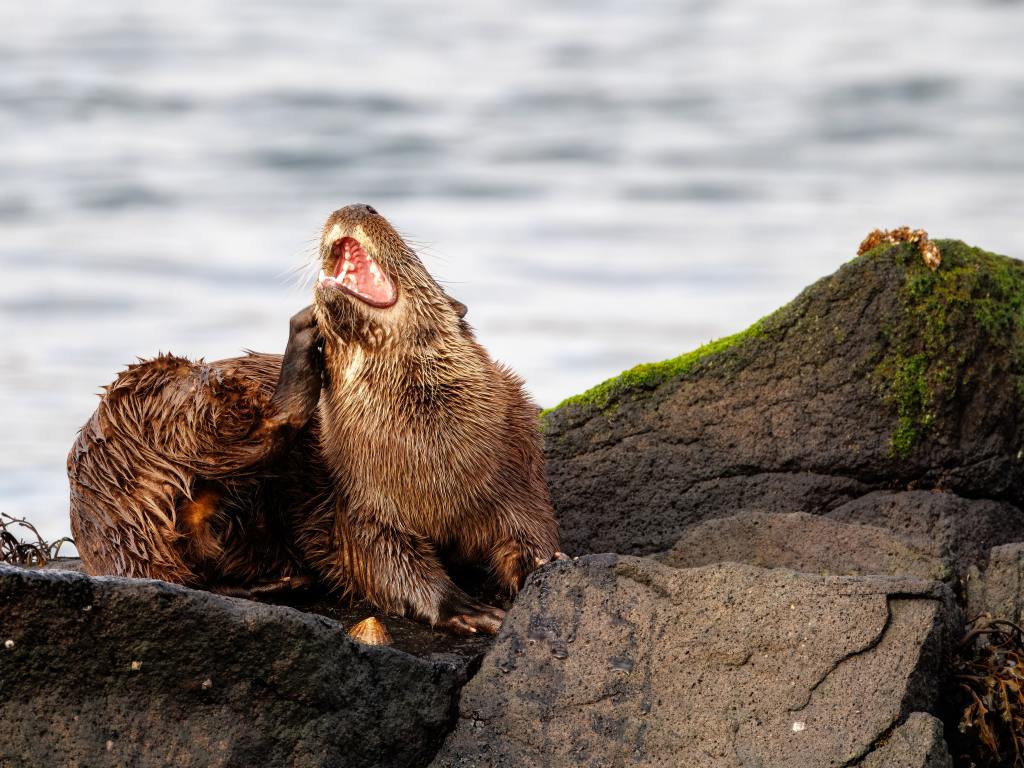
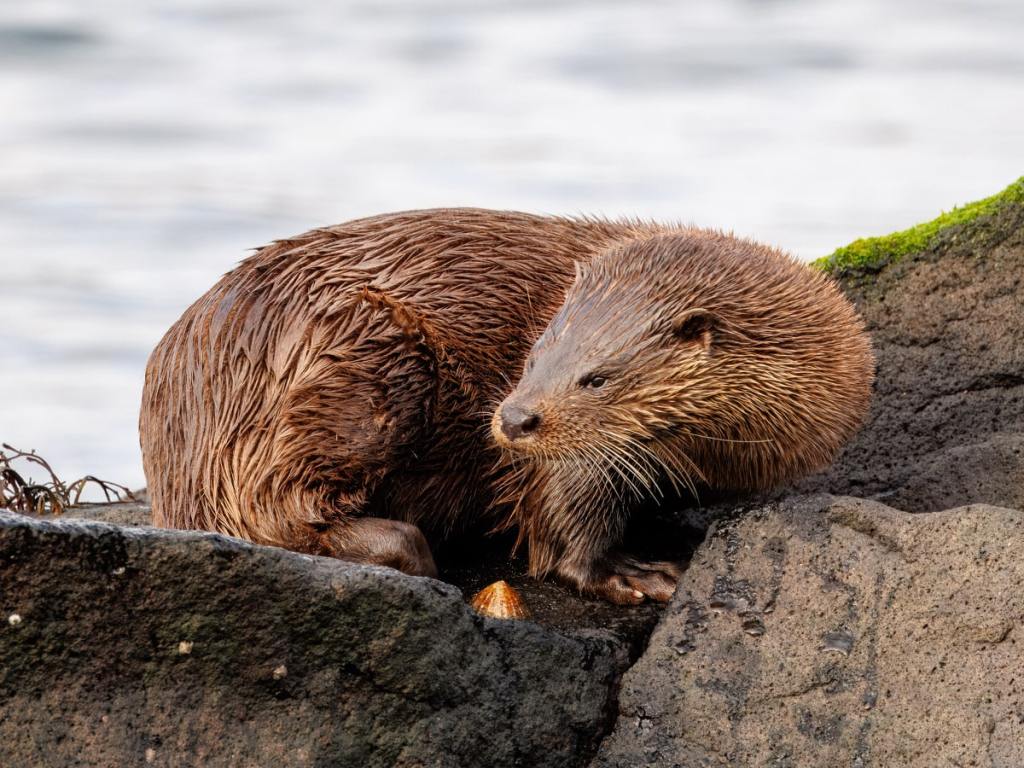
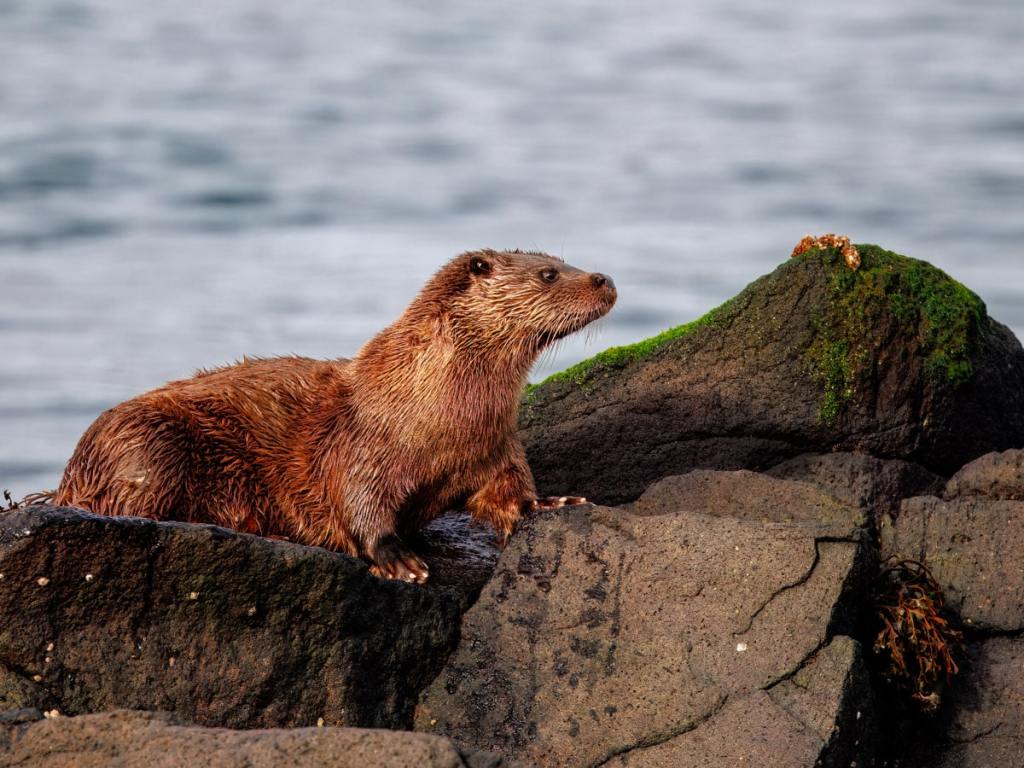
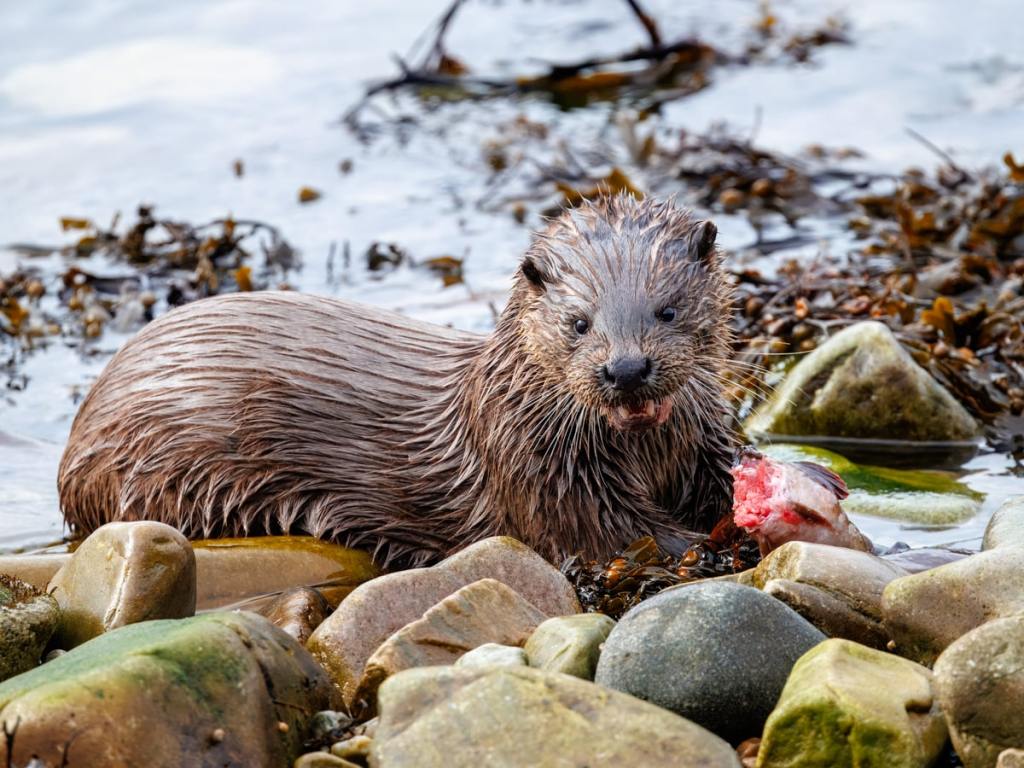
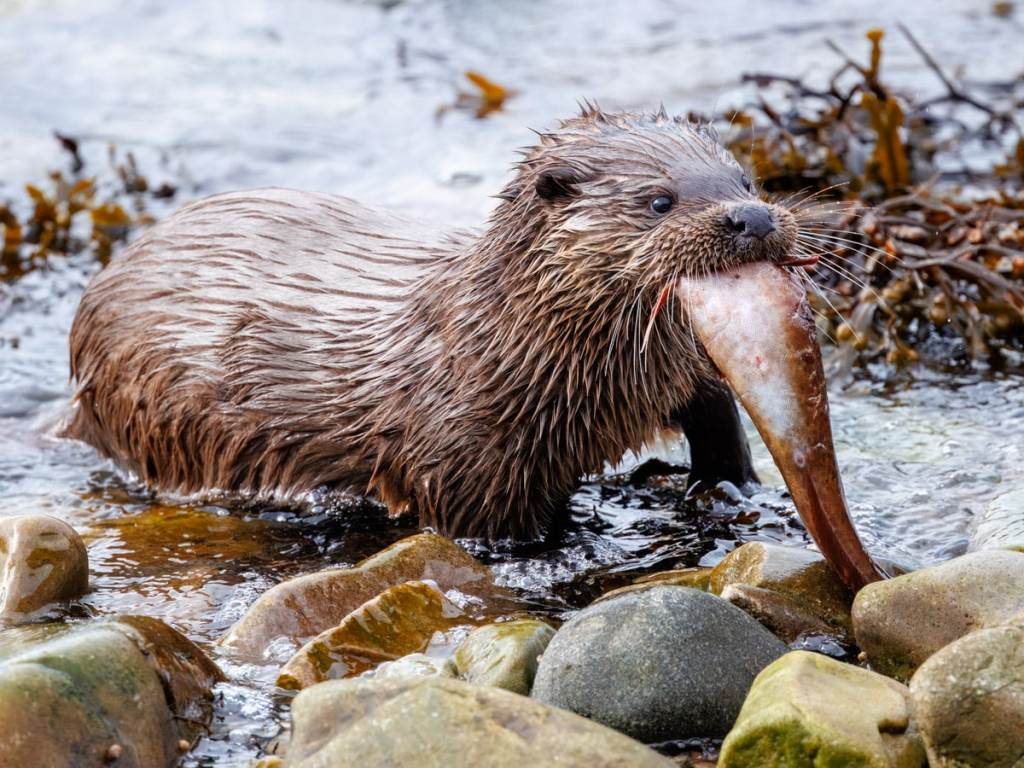
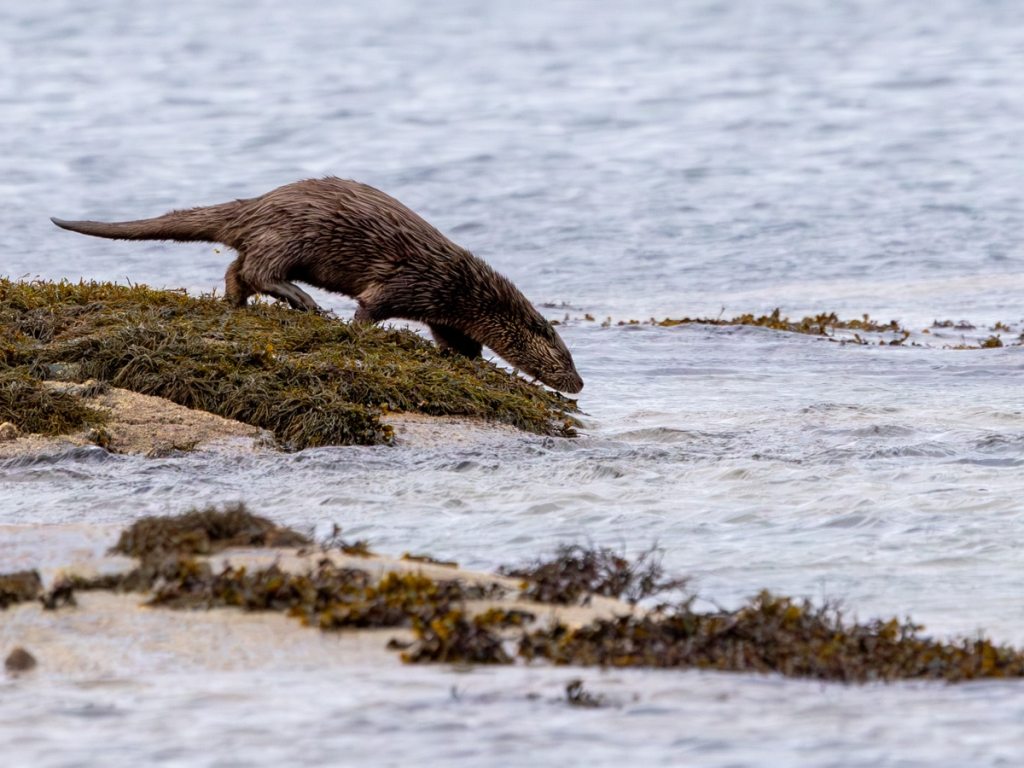
Example photos of Otters
Here are a sample of photos to illustrate what you can capture with good fieldcraft and the right techniques.


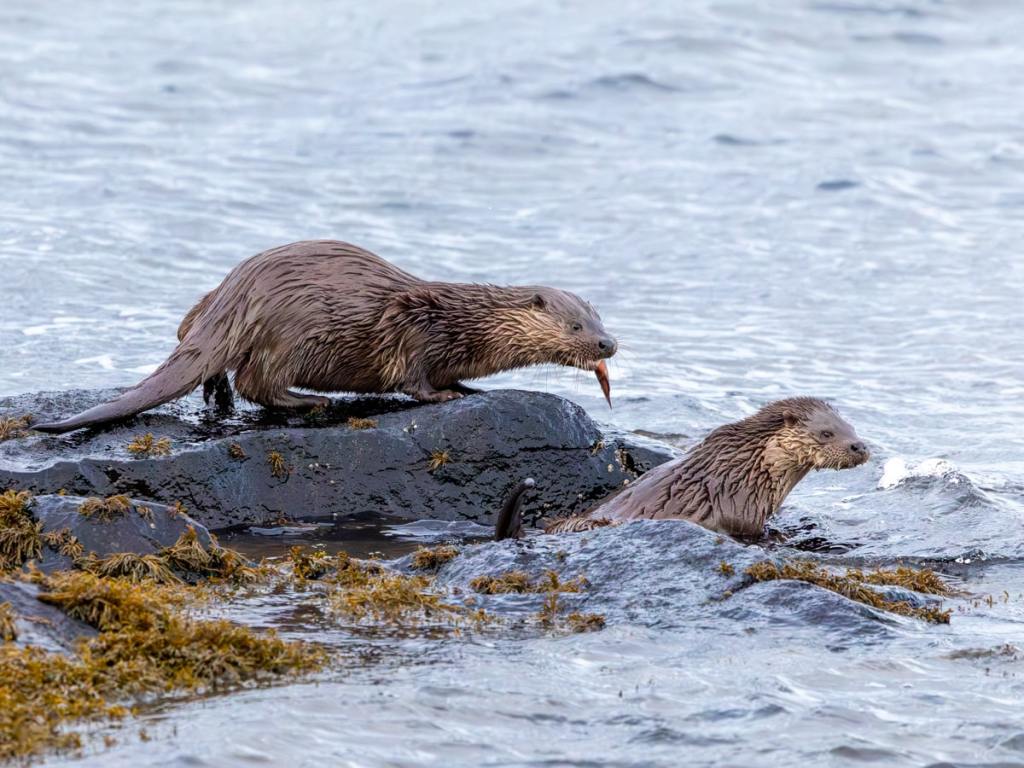

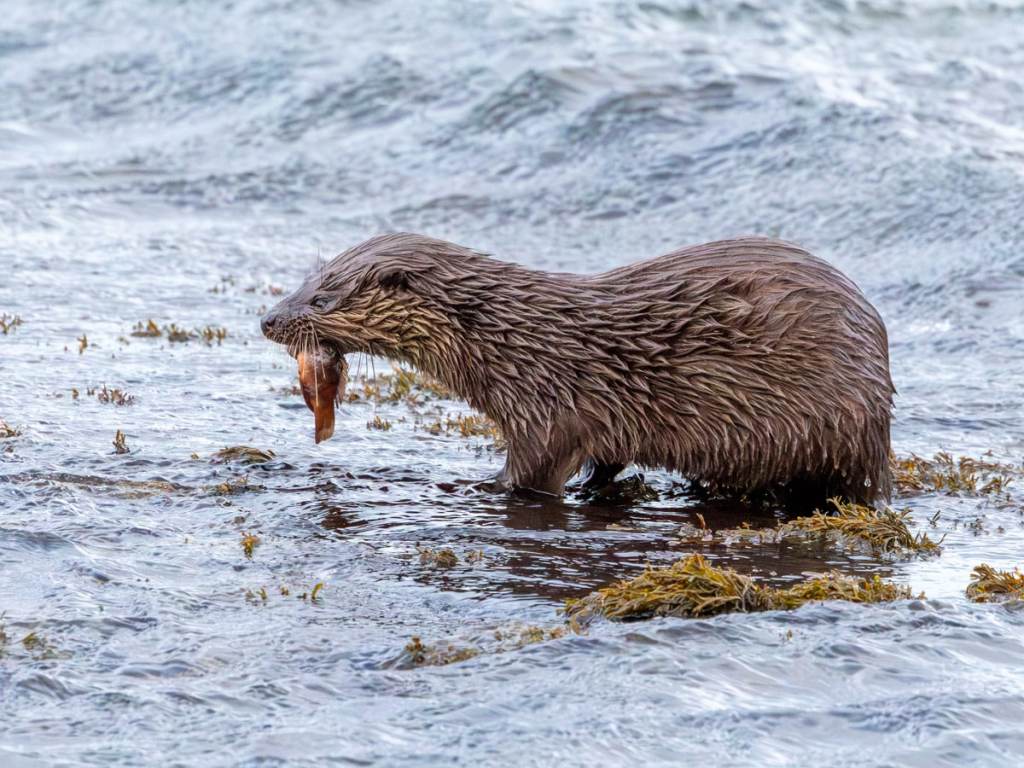
Top 10 Tips for Photographing Otters
- Scan the water not the shore. Otters are easier to see when swimming in the water (providing the water is flat enough). Look for a V shaped wake and a clear thin tail when they dive to distinguish from seals.
- Only move when you have a plan and the Otter is underwater. When I first see an Otter I watch it to see what it is doing and where it is going. Then I get ahead of its direction of travel. I am only moving when the Otter is diving and under water. I time its dives. This way, I can guess when it will resurface. I get low before I expect it to come back up.
- Be Quiet! This should be obvious but I really mean it. Don’t have your car radio on, close car doors quietly. Beware walking on noisy gravel when the Otter is above water. Put your camera on silent shutter – I rarely use this with most animals but I always do with Otters.
- Pay attention to wind direction. The ideal situation is you have the wind coming into your face as you look at the Otter. So if the forecast is for wind from the north, search for Otters on the south shore of a loch. If an Otter gets wind of you it will be off so you need to pay attention to wind direction.
- Beware of your silhouette. Think about the otter’s viewpoint. If you are stood on a small hill with the sky behind you you will give a big human silhouette. What is behind you is important. And of course some cover in front of you (rocks etc) is important.
- Get out in all weather. Otters do not mind the rain – they live in the water! And for photography bright sunny days are not the best either. Some of the most atmospheric shots come in challenging conditions. But of course you need to protect yourself (good waterproofs) and your camera equipment (rain cover).
- Know your spraint (otter poo). Otter sprains is important in Otter society and with experience you can spot a spraint rock a mile off. The are like magnets for Otters traveling past. So don’t chase Otters let them come to you! Position yourself a respectful distance from a spraint rock and wait. (See video above to identify spraint rocks).
- Ethics come first. This is important. It is illegal to disturb Otters in certain situations (e.g. near their holt or on way to it). But no photo is worth disturbing or distressing a wild animal. You won’t be proud of your photo of a scared animal. If an Otter is hyper-alert and looking straight at you back off, you are too close. If you are new to photographing otters I strongly recommend using a guide to learn how to safely photograph Otters.
- Value the experience too. Make sure in your photography efforts that you also value the journey. Enjoy learning the fieldcraft. Enjoy learning about Otters. Enjoy just watching them for a sustained period of time too. Don’t rush Otter sightings by approaching too soon and going for photos too early. I once spent over 3 hours with a family of 4 Otters. The experience was amazing and the photos too because I didn’t rush it.
- Get a guide. Otters are one of the hardest subjects to photograph. It takes time to develop the knowledge and fieldcraft to get great shots. A guide can accelerate this development:
- you will get more sightings
- they can teach you the fieldcraft
- teach you about the Otters
- help you get a wide range of photos for your portfolio
- give you an amazing experience of Otters.
Otter Photography Workshops on Mull
I’ve been photographing Otters on Mull and elsewhere in Scotland for over 20 years. I know the best locations on Mull and Jura (my two favourite locations). And, I am experienced wildlife photographer who can support you in your development.
My Otter Photography Workshops are designed to give you three things:
- A great range of Otter photos for your portfolio
- Develop your skills – both fieldcraft and photographic.
- Give you a magical encounter with Otters.
My workshops are limited to two photographers and last 3 days.

Discover more from WildScot®
Subscribe to get the latest posts sent to your email.