It is often a rare Scoter (small black duck) that takes me east of Edinburgh. Previously I have been out this way looking for the over-wintering White-Winged Scoter. But this week it was its very close relative (until recently the same species in fact), the Stejneger’s Scoter that peeked my interest. I haven’t been out birding for a while and this was as good a target as anything.
We arrived early in the day and the light was very poor. My camera was registering 20,000 ISO which meant I wasn’t going to be getting great photos today.
The first bird of the day was close-up views of a Fieldfare and before long we were seeing them everywhere. Well not everywhere more accurately everywhere where the Sea Buckthorn was present. These berries must act as neon lights to the migrating birds coming in off the sea and why the berries evolved to be bright orange one presumes.
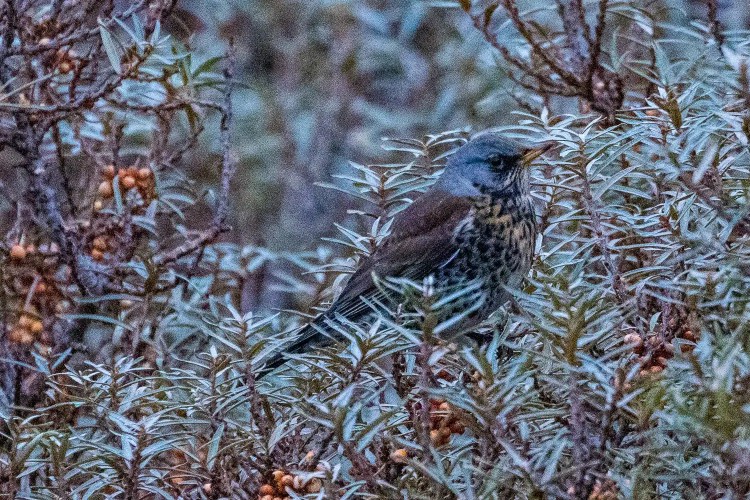

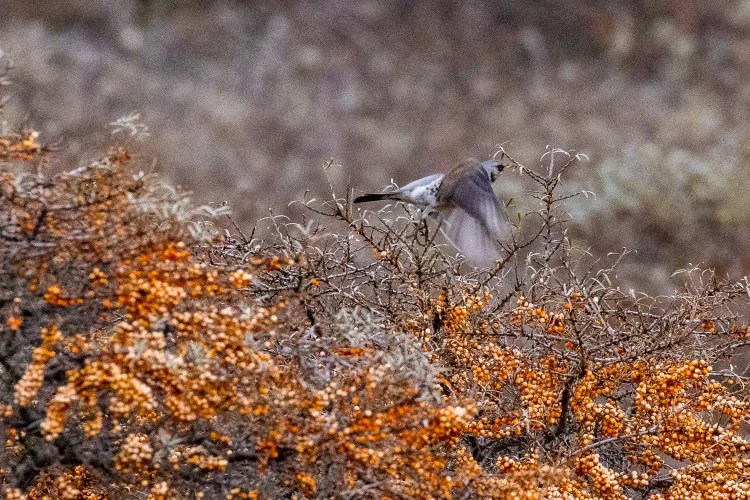
At points we could see hundreds if not thousands of Fieldfare working the crop (with the odd Redwing thrown in for good measure). A seasoned patch observer we met in the car park on departure estimated about 4,000 were present. As well as seeing them foraging in waves we also saw fresh birds arriving in off the sea.
We stopped at the small pool and put up a Heron and a couple of Common Snipe. The pool was mostly frozen but there were thawed out sections of bog around the fringes.

In the rough scrub beyond we saw several Stonechat taking up their prominent perches.

We continued to the coastal dunes to search for the Scoter and joined other faithful who were already there. Now we did see a lot of Scoter but mostly Common and a few Velvets, nothing rarer. Sea-watching like this really is an acquired taste, we were looking for subtle differences firstly to find the few Velvets among the Common (larger bird, white wing patch in flight, yellow bill and white eye tick) and then to see if any of these were different again with a red bill and a distinctive bump or protuberance on the bill. We never saw the Stejneger’s Scoter but we did see something special worth the trip.
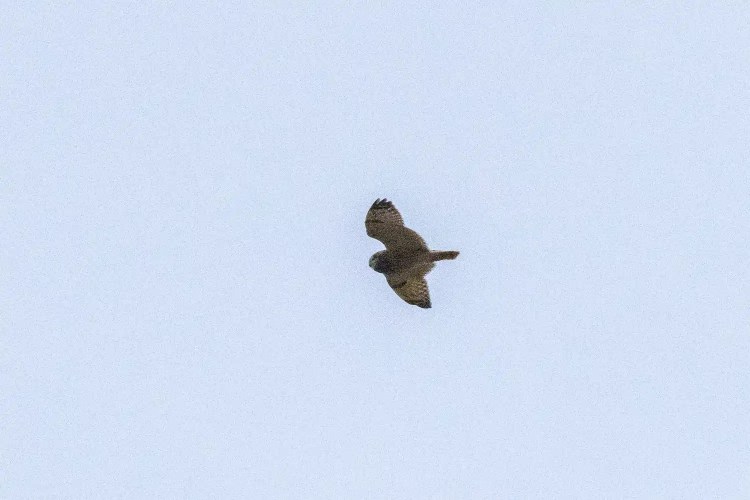
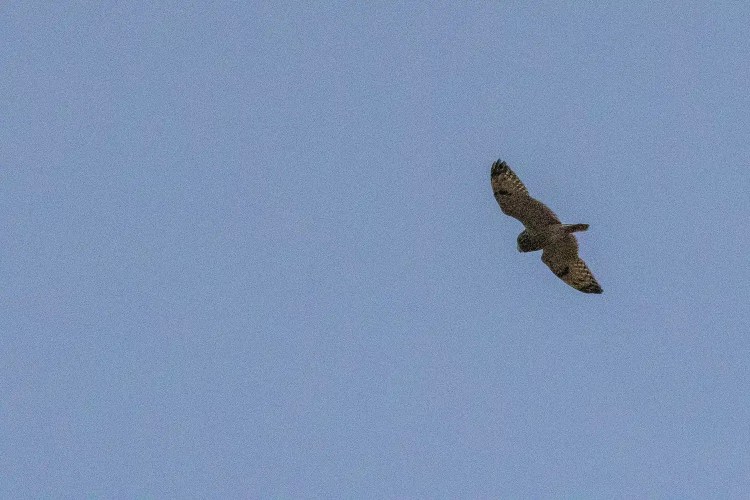
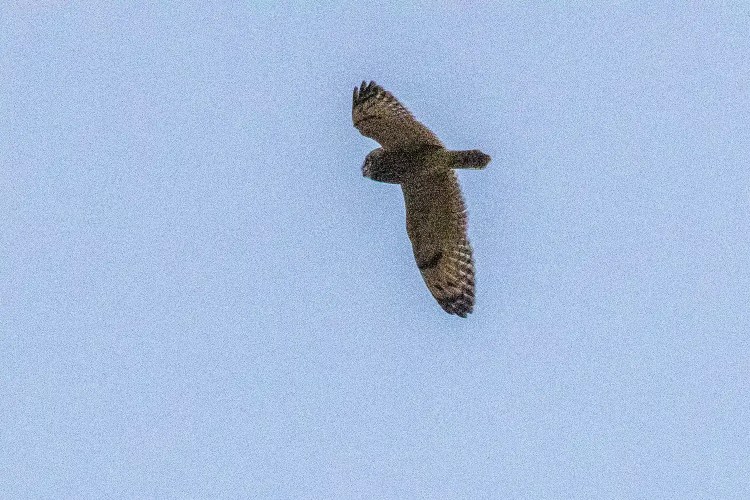
We hadn’t even arrived at the final dune overlooking the beach when we saw two Short-Eared Owls coming in off the sea. And whilst scanning for the Scoters we saw another 2 come in off the sea too before a final SOE put in an appearance high up (taking the total to 5) coming in from the north. The colder weather was obviously forcing quite a few owls to move to warmer parts. We wondered whether the 5 owls we saw had come from the Continent or perhaps just from further north in Scotland coming over from Fife. They were lovely to see regardless. The light was terrible so not great photos but a lovely experience none the less.
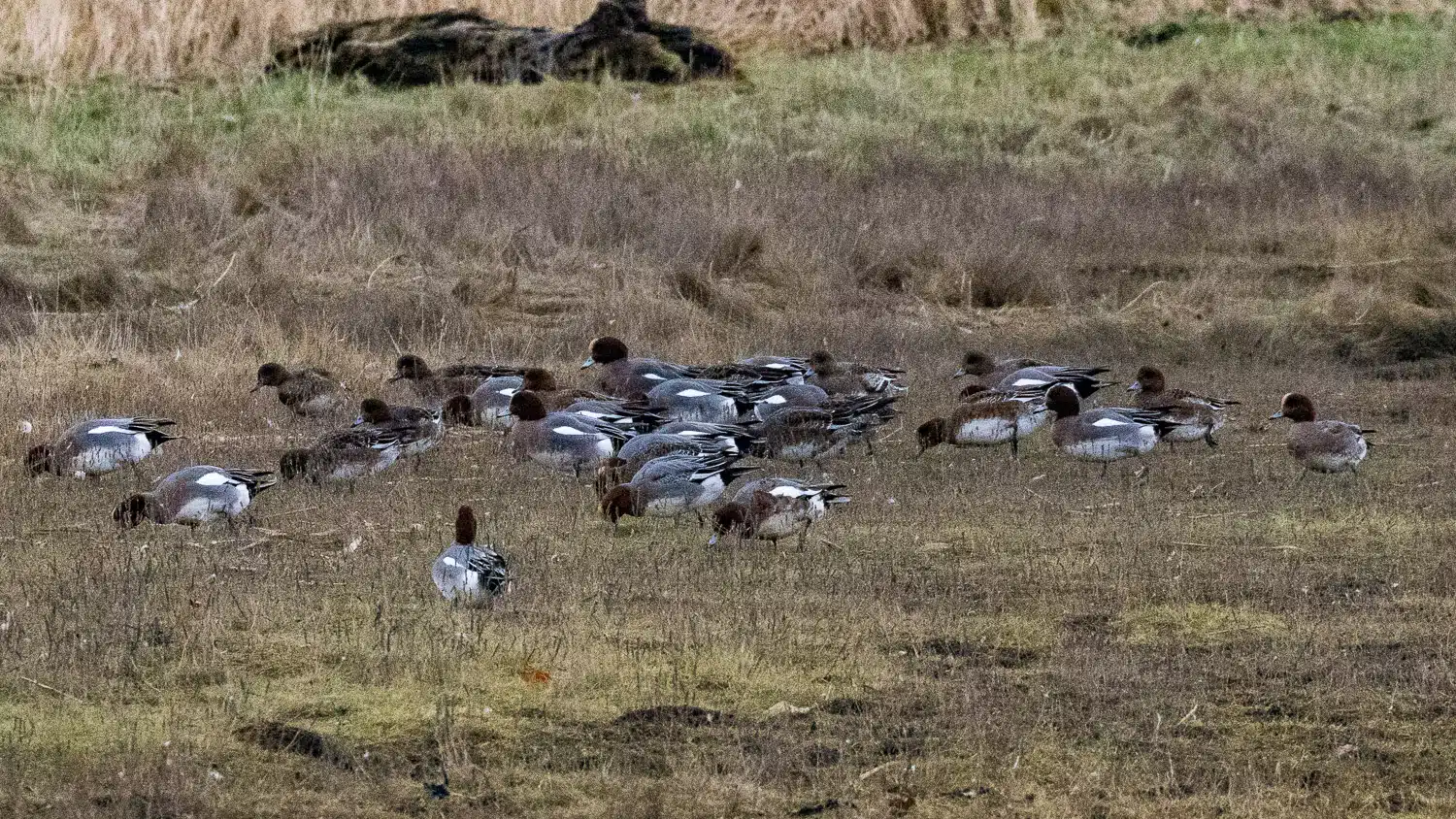
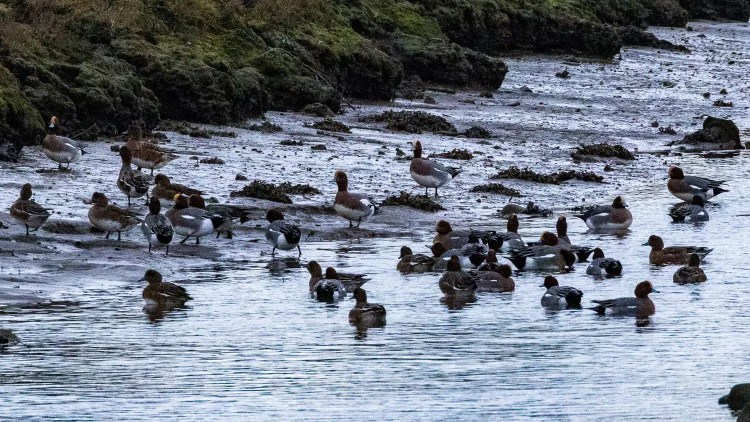
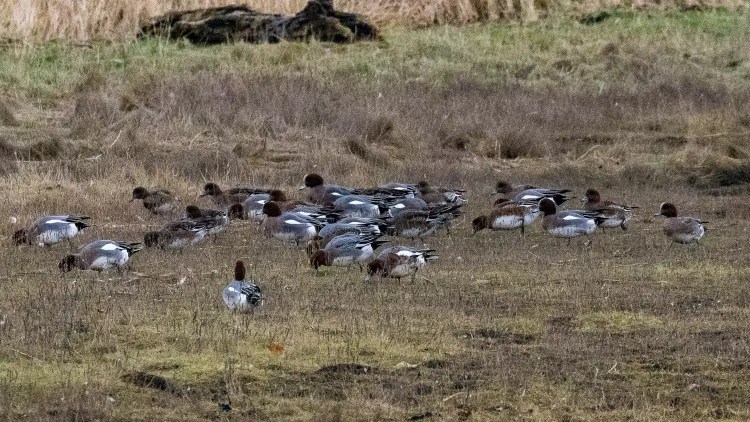
We returned to the carpark and checked out the river and mudbanks. Lots of Teal and Wigeon (pictured below) were present along with a few Mallards.
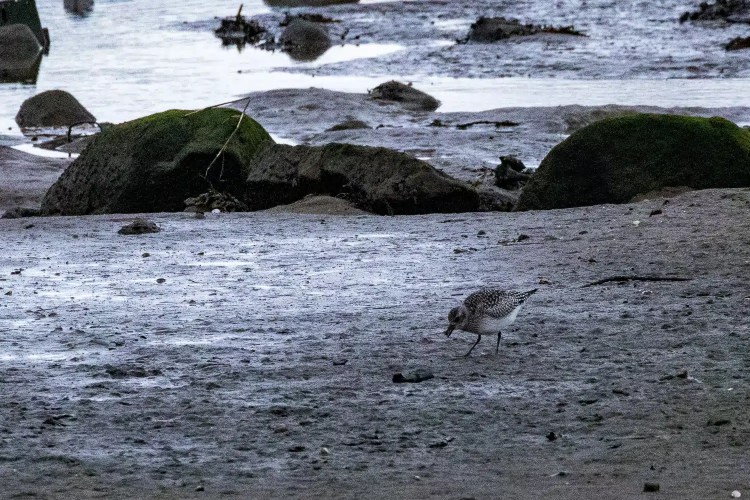
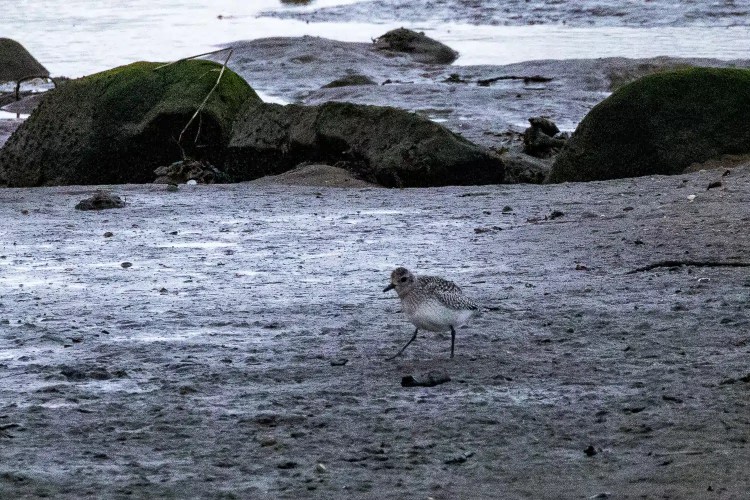
We notice some fox tracks going up the sandbank. As well as several Curlew, Redshank and a single Black-Tailed Godwit we also saw a lone Grey Plover (pictured below) which is always a nice bird to see.
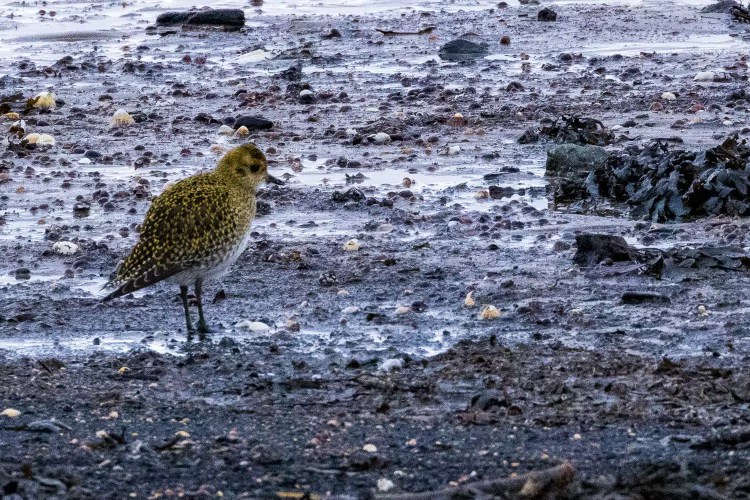
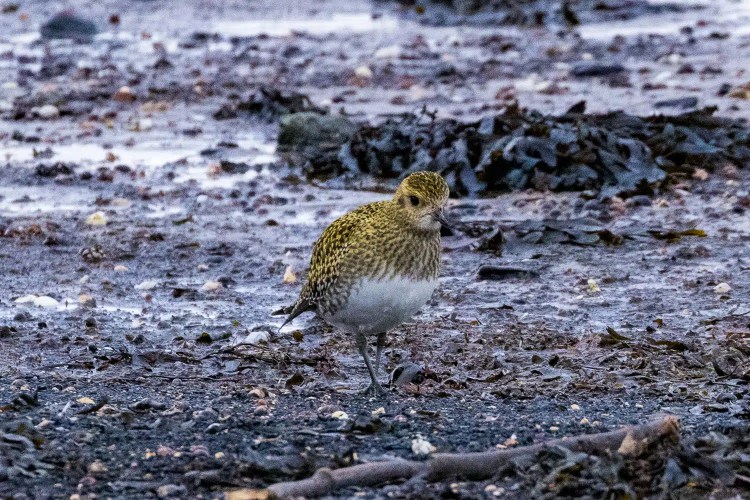
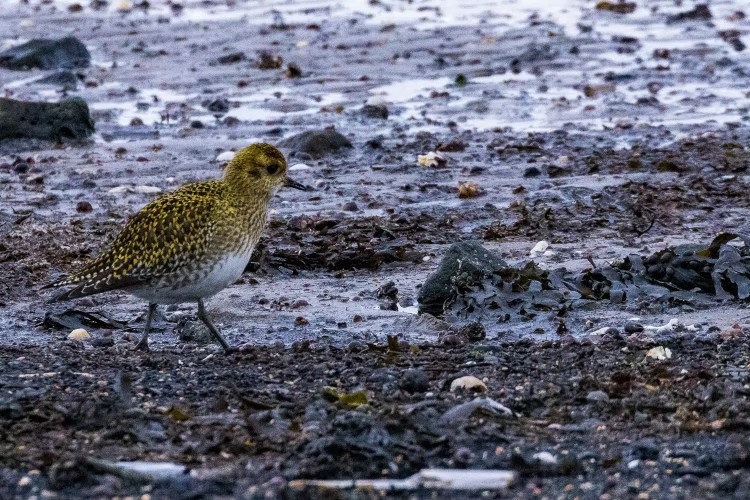
We started driving back to Musselburgh’s River Esk stopping a few times along the shore to see if anything was about. We enjoyed some fish and chips whilst watching numerous Golden Plover feeding nearby.
A Common Gull stood on one leg on a nearby rock. They do this to save heat energy when there is a breeze blowing. Every little helps.

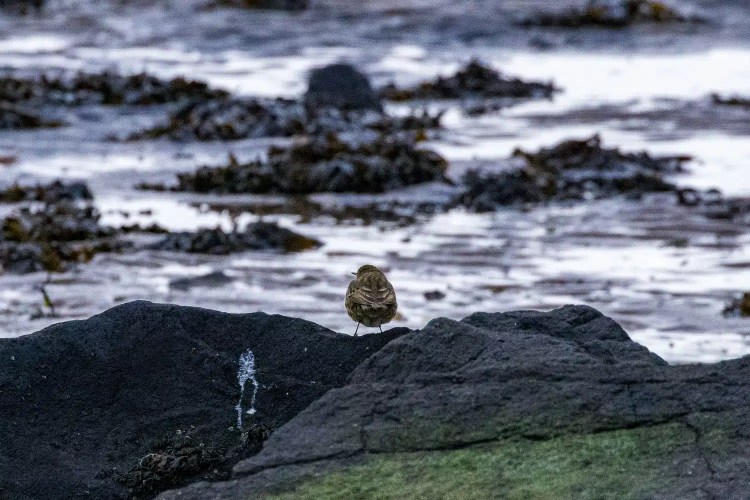
A Rock Pipet hoped over the… well… rocks
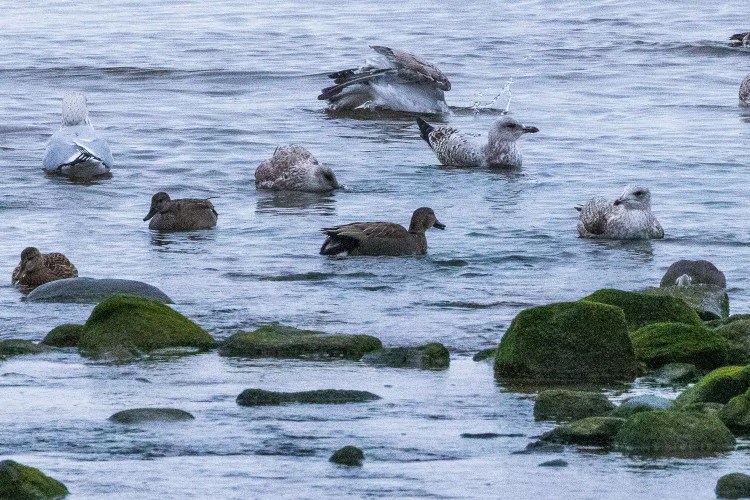
Where a burn entered the sea we saw lots of gulls a few mute swans but most interesting was 4 Gadwall Ducks feeding. Still not too common in Scotland so always nice to see.

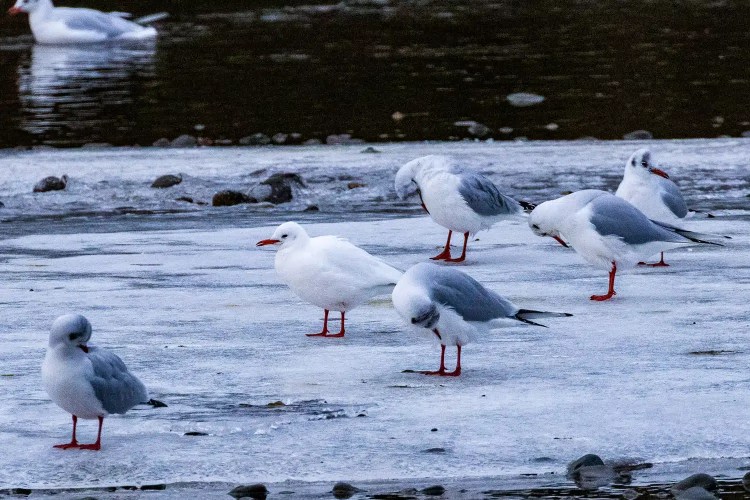
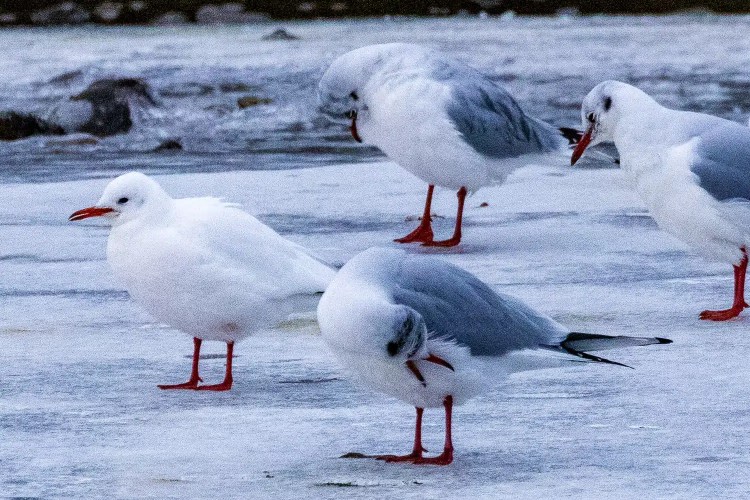
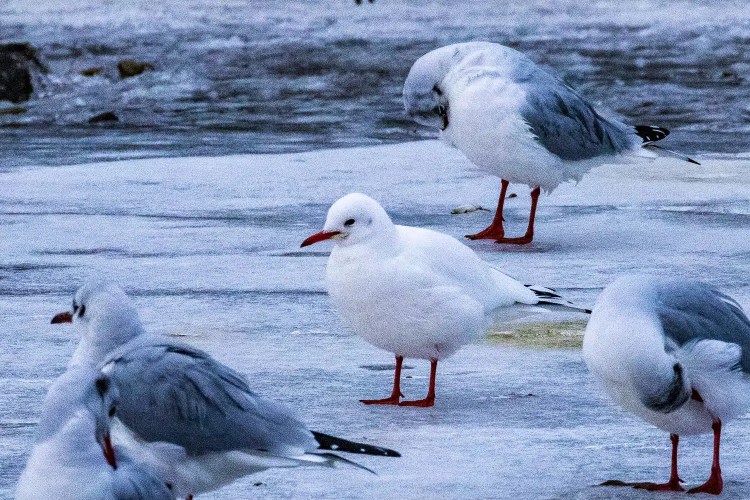
Reaching Eskmouth we scanned the gulls for a Mediterranean Gull. There weren’t any but perhaps even rarer was an almost fully white leucistic Black-Headed Gull. Only a few black wing feathers spoilt the almost total effect.
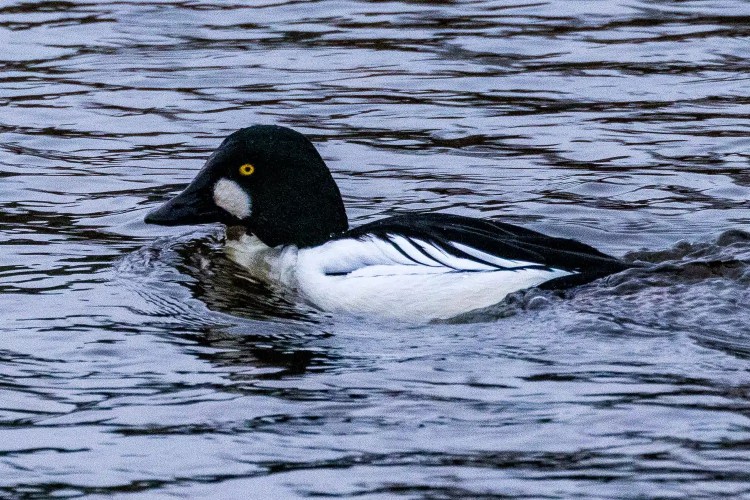
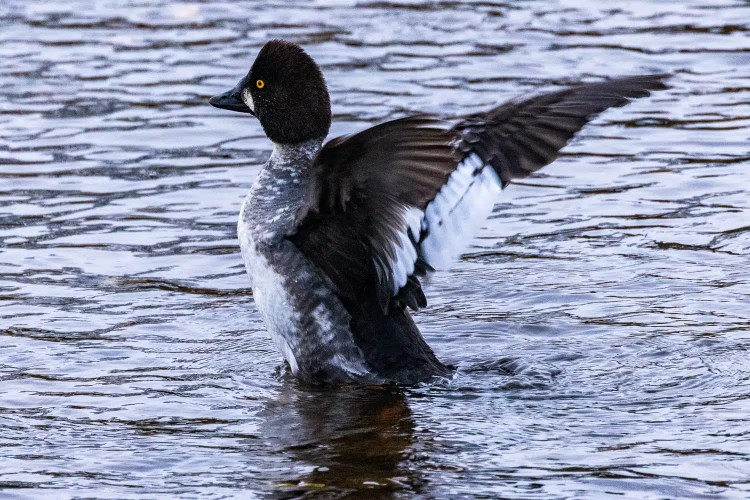
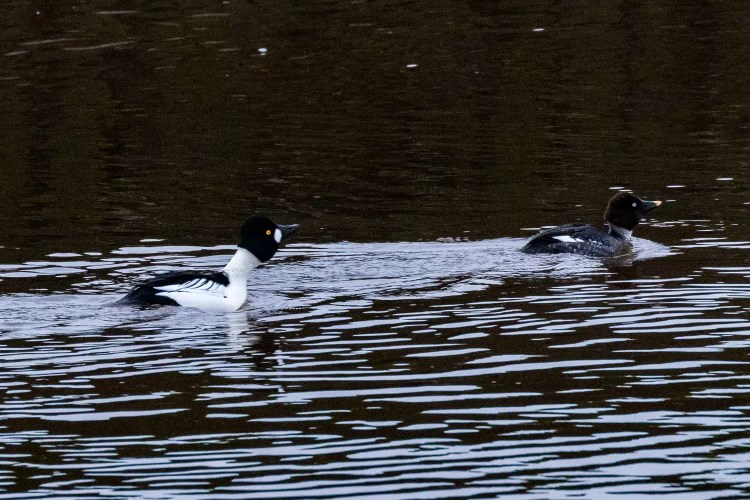
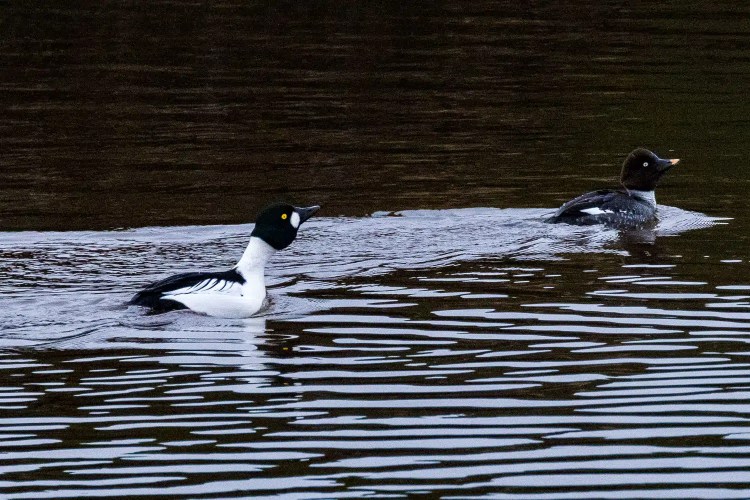
Continuing towards the river mouth we saw numerous Goldeneye with some of the males chasing the females displaying by sky pointing their bills. This is one of my favourite ducks and brightens up many a winter’s walk by my local rivers.

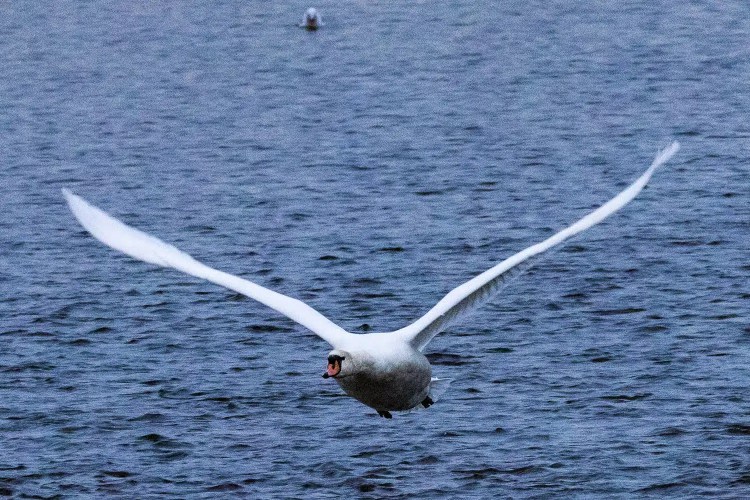
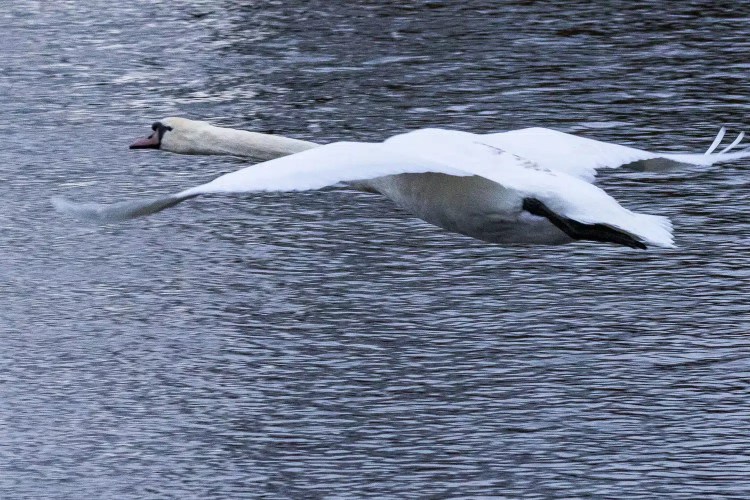
Two swans flew up the river their wingbeats betraying them before they came into view. One had a bright red bill (mature adult) but the other had a paler bill indicating a sub-adult.
Several Wigeon with their yellow punk-rock hair-dos were swimming in the river too.

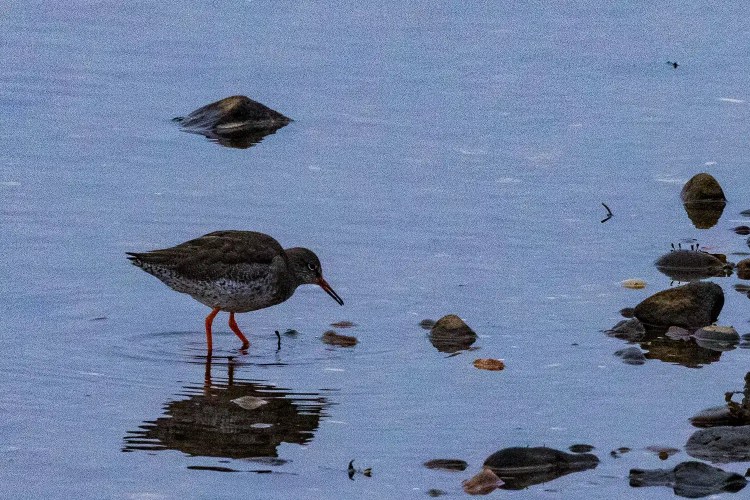
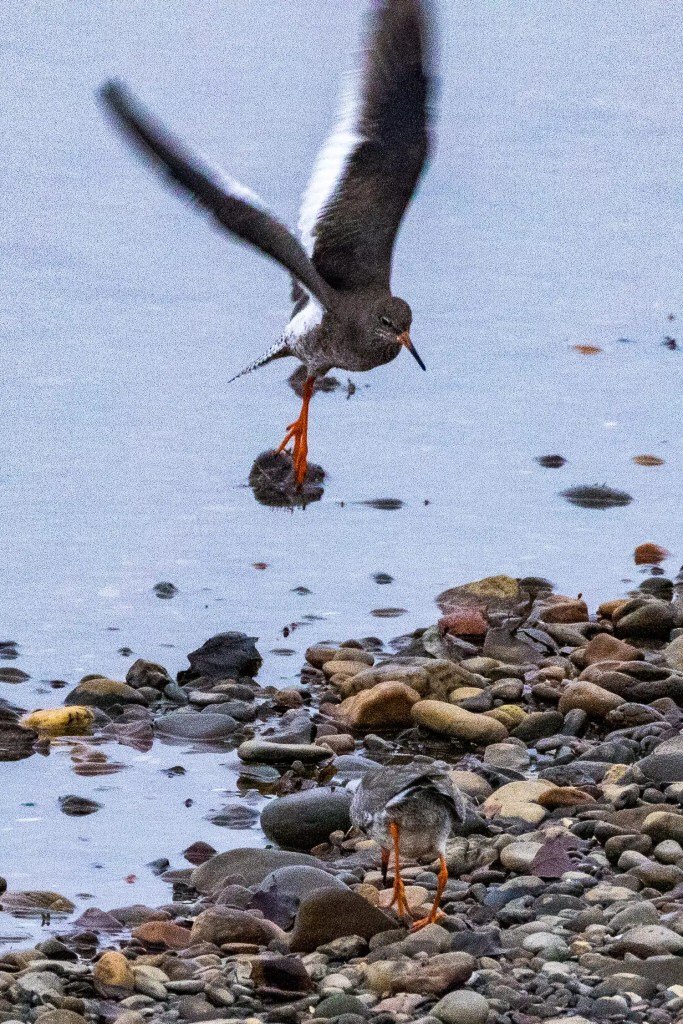
Redshank were feeding at the waters edge. One flew down the river and came into land but another was already there and took exception as if saying this patch was already taken. After a brief scuffle the encroaching bird flew off to find an easier part of the river to feed.

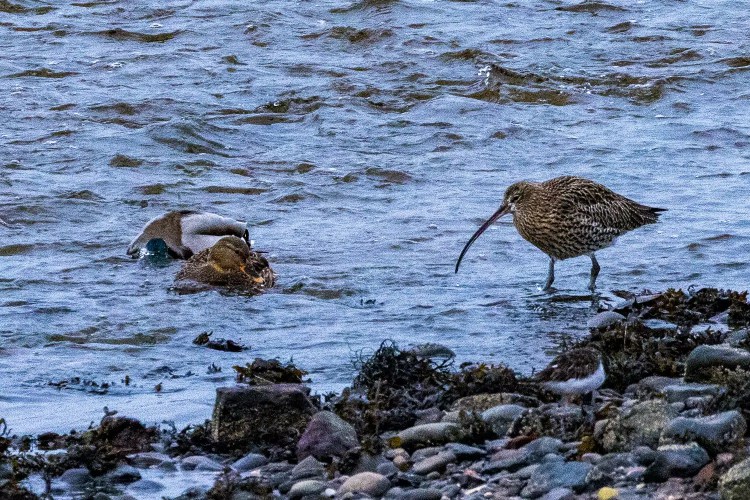
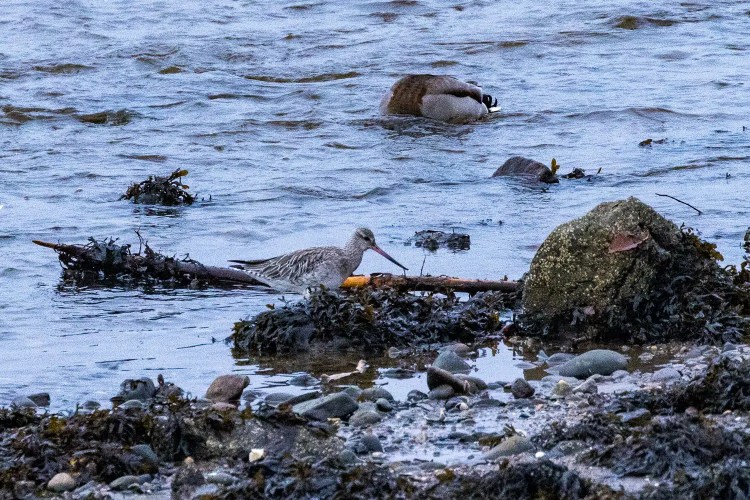
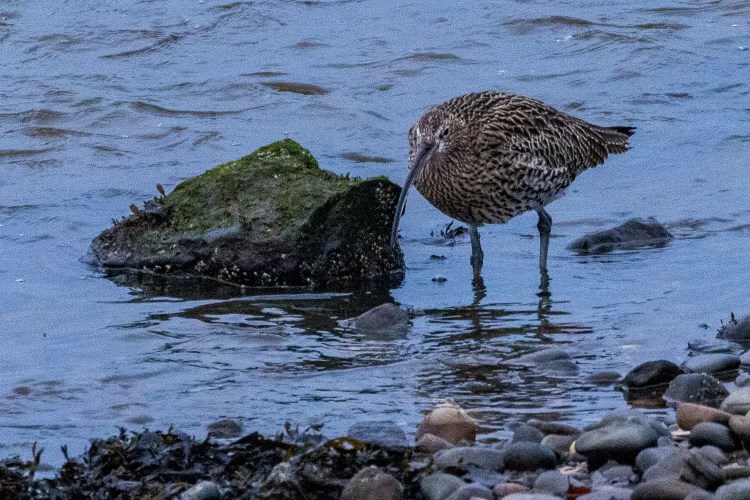
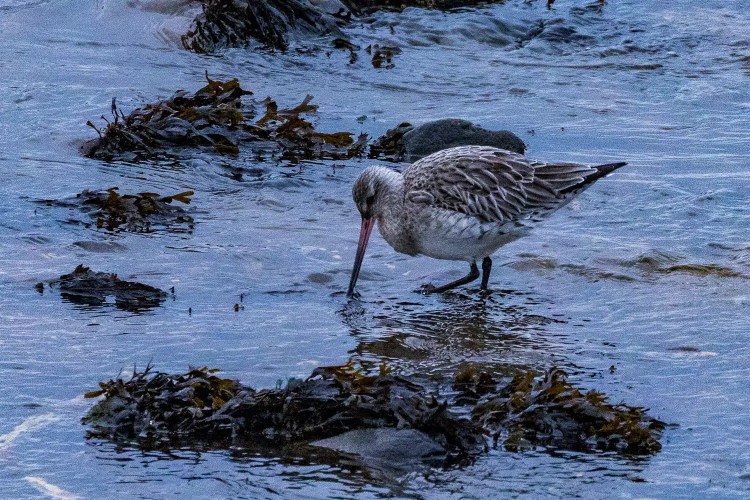
A single Bar-Tailed Godwit was feeding along with several Curlews. The Curlews with the long down curved bill, the Godwit with a slightly shorter and straiter bill. The Curlew more brown in colour, the Godwit more greyish.


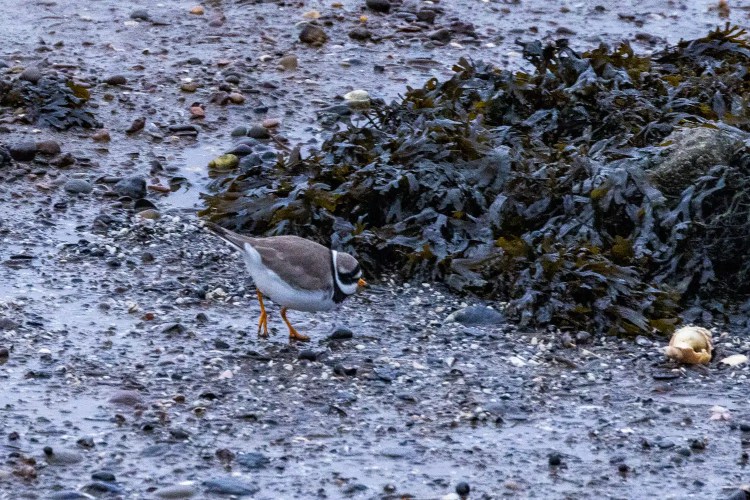
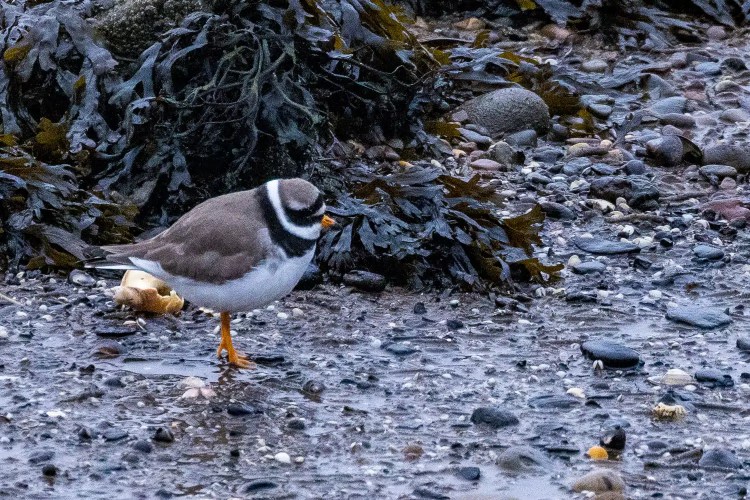
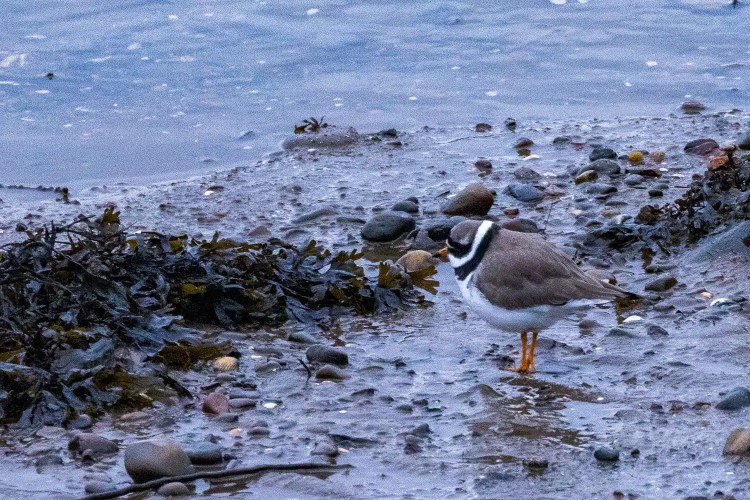
A few Ringed Plover were feeding on the shore. A small but very handsome bird with bright orange legs and feet neck banding black and white.
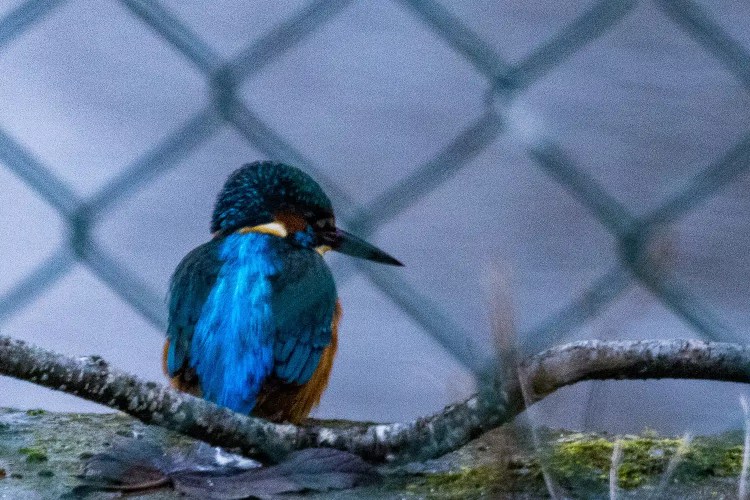
A World Cup final football match was calling so it was time to leave and we returned to the car. Driving out I suggested we slow down to look at some bushes where I had seen Kingfisher before. This was more wishful thinking than anything but sure enough a Kingfisher was there, perched on the concrete river wall its electric blue back showing through the metal fence. My friends were impressed with my conjuring ability. I took a few pictures through the car window and waited til it turned its head showing an all black bill meaning this was a male bird.


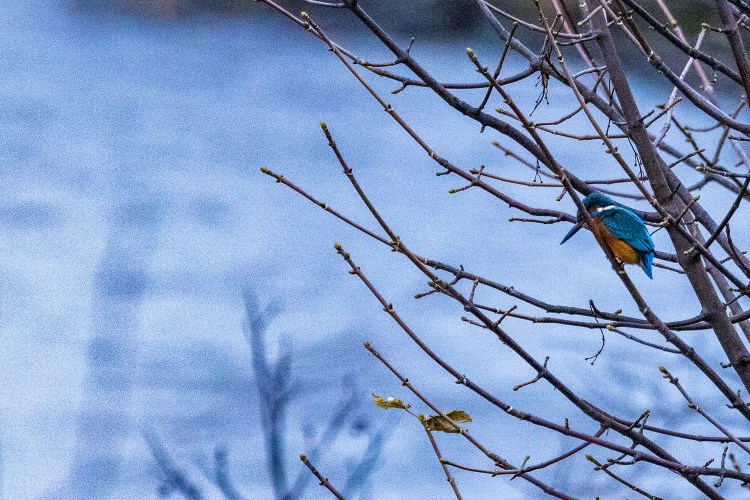
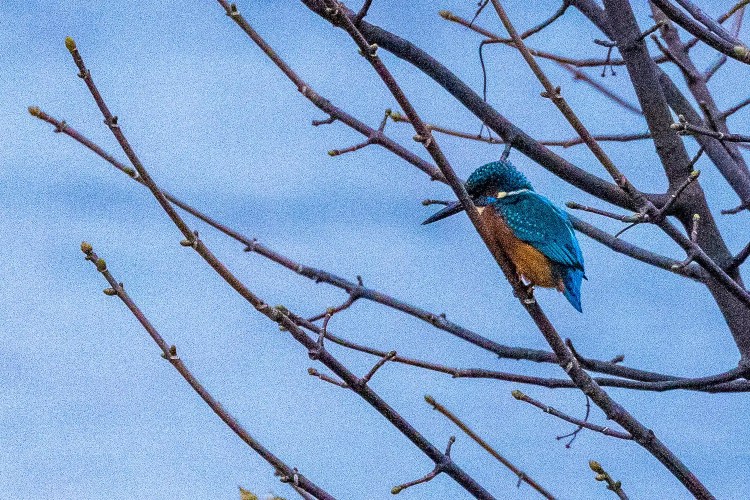
I got out at a safe distance and started approaching to see if I could get a better photo. It flew up into the tree briefly for a more natural shot, albeit a branch in the foreground but then it was gone up stream. A lovely end to the day nonetheless.
Discover more from WildScot Photography
Subscribe to get the latest posts sent to your email.
The kingfisher was definitely a lovely cap to the day. Happy Christmas.