
Bass Rock is the world’s largest Northern Gannet colony. I have been wanting to visit it for ages and finally made it at the weekend.
We booked on a fast RIB boat trip organised by the Scottish Seabird Centre at North Berwick. This “Three Island Seafari” trip also visited the Lamb and Craigleith but it was quite late in the season to see much birdlife on these Islands but Bass Rock itself did not disappoint.
Since the boat we were on was a RIB and it was quite windy we did get very wet but I guess that just made it a bit of an adventure. But I did have to work hard to keep my camera equipment and binoculars dry. Slower, more sedate boats are available.
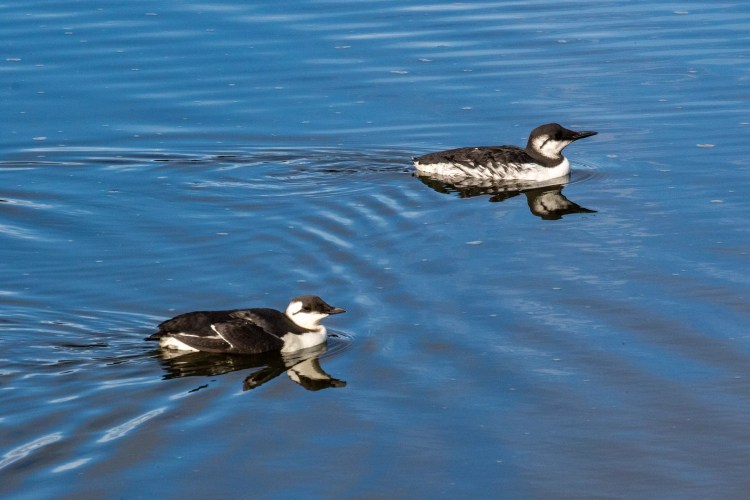

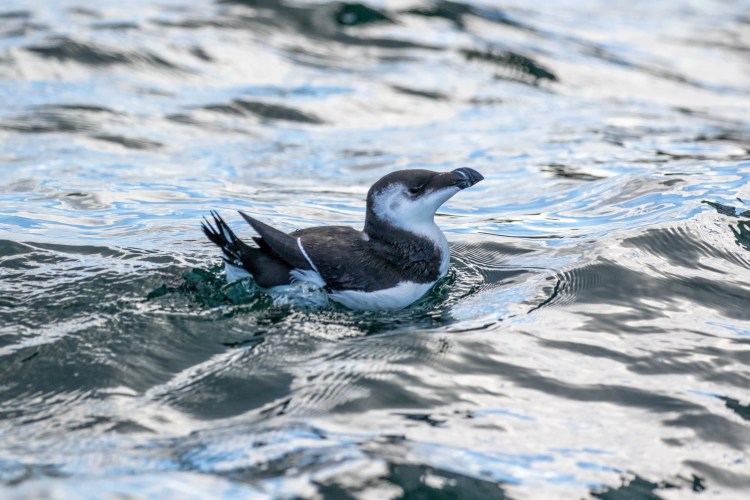
Before reaching Bass Rock we saw some Common Guillemots and a Razorbill. There are a lot of Guillemots and Razorbills close to west coast shore at the moment and in rivers. Over the last few weeks I have seen Guillemots in the Forth around Stirling, for example. Whilst the cause is not yet fully understood it is not natural, healthy behaviour and sadly many dead birds have been found too.
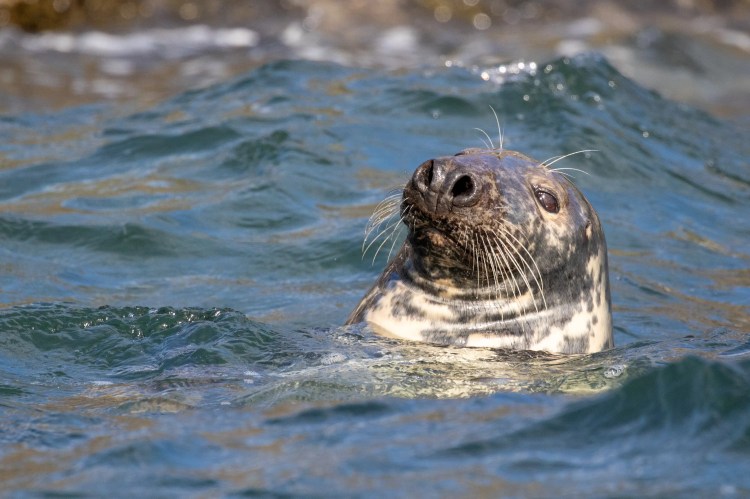
On a happier note we got a nice close-up view of a Grey Seal around Craigleith. Along with a few Shags and Cormorants drying their wings.

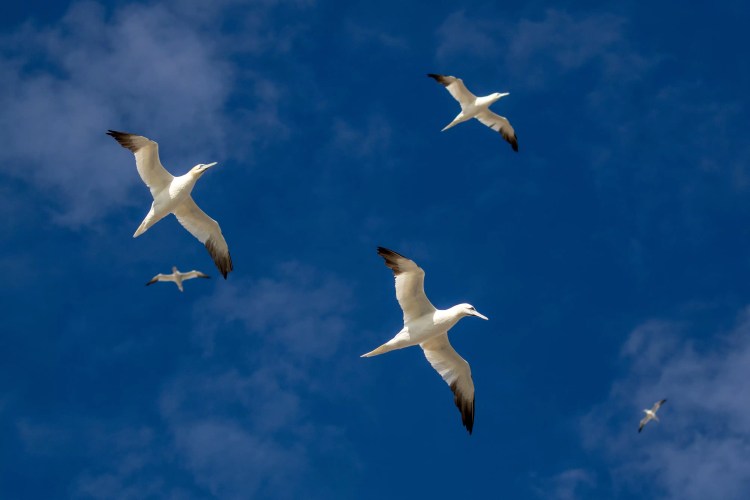
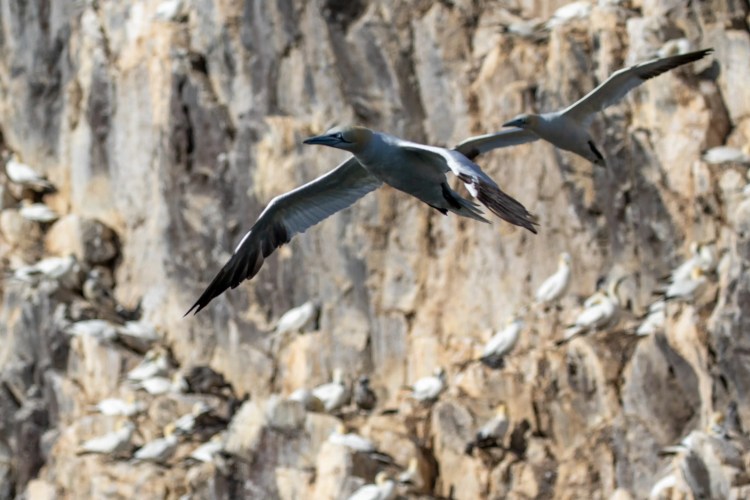
As we approached Bass Rock the air started to fill with Gannets, our largest native seabird. Quite a sight.


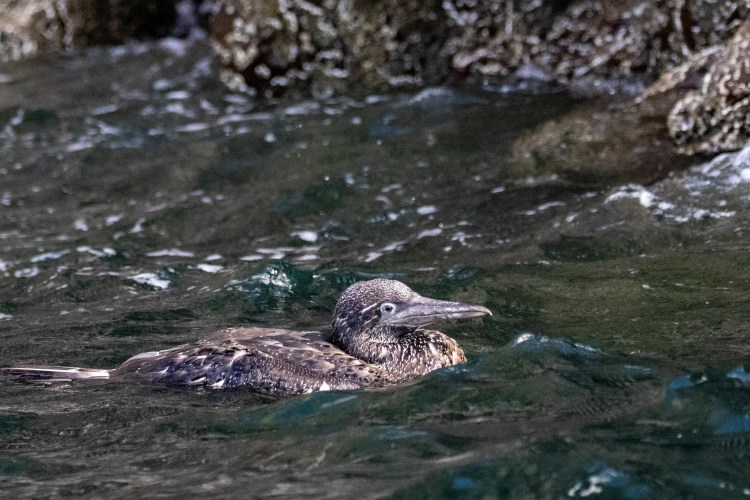
We also came across several juvenile Gannets in the water, not yet able to fly. Juvenile Gannets have the same basic shape as the adults but their plumage is completely different which means many people don’t realise they are Gannets at all. After a life of being cared for by two parents they leave the nest weighing more than their target weight and are unable to fly as a result. It will be a few weeks before they master this skill.
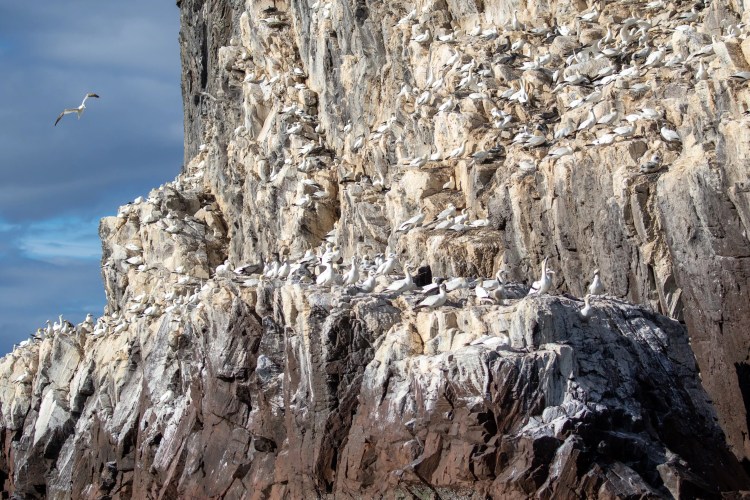
Once at Bass Rock itself we saw the cliffs covered in Gannets by the thousand – a truly spectacular sight, with all the accompanying sounds and smells.
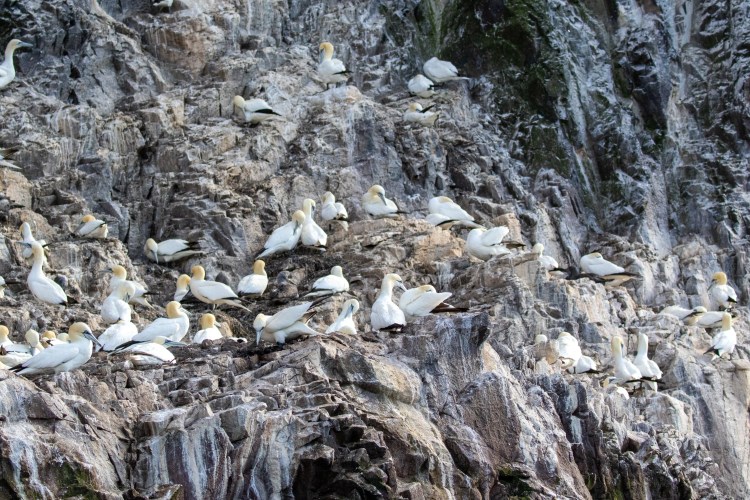
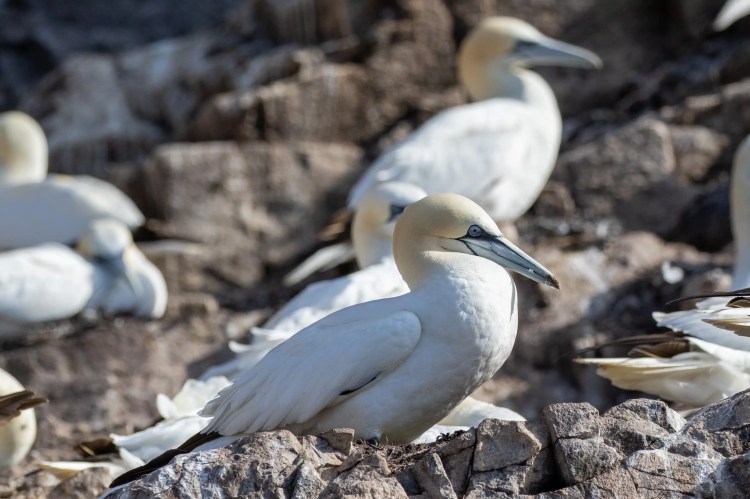
We were able to pick out more Gannet chicks (known as guga’s) some still with their downy covering others moulting this off. Some were practicing their flying skills.
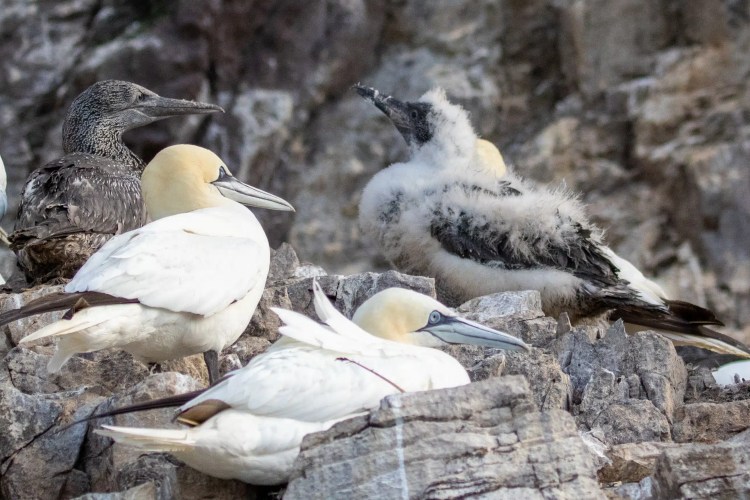

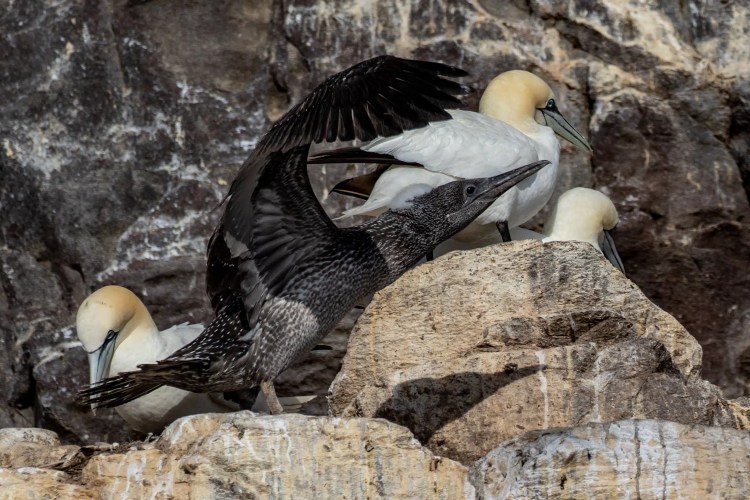
As we continued around the island every available nest site was occupied with thousands of Gannets. At the peak of the season Bass Rock is home to over 150,000 Gannets, over half of the European total!

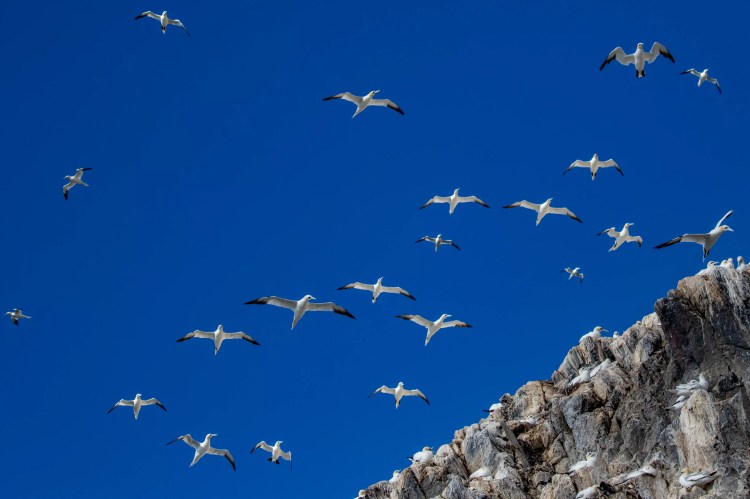
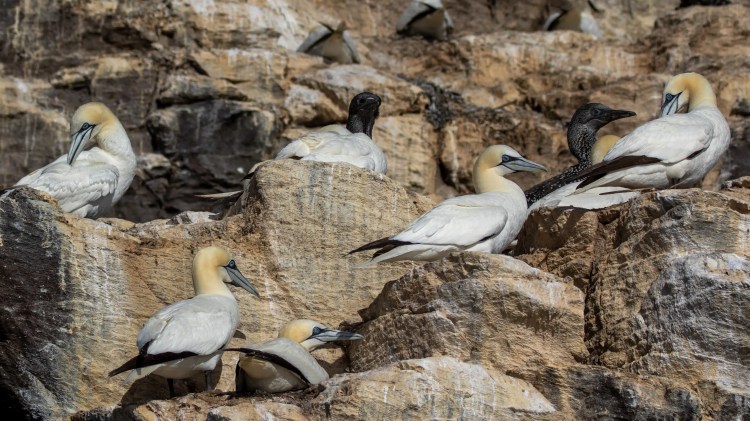


Gannets are actually highly territorial birds on the nest, albeit protecting a very small area. If a guga (Gannet chick) falls from the nest outside the territory the parents will no longer recognise it as offspring and therefore they will no longer care for it and it will perish. There is a clear line between their territory and that of their neighbour and if that line is crossed, warnings will be given and if they are ignored a fight will erupt. Mostly the fighting Gannets will fall into the water to continue the fight. These fights are often to the death as a Gannet beak is a formidable weapon. We saw one dead gannet being eaten by a Greater Black-Backed Gull following such a fight. We also interrupted a dramatic fight in progress.

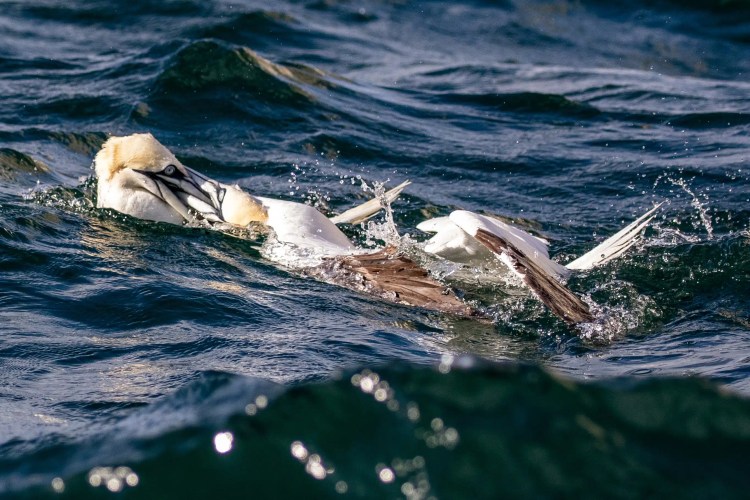

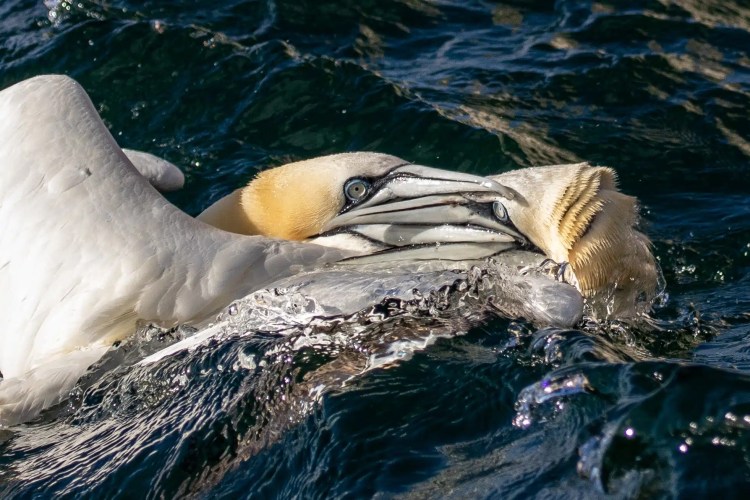
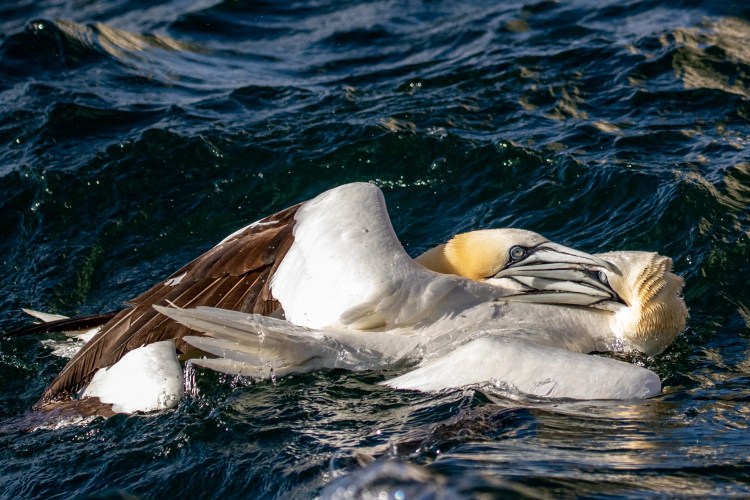
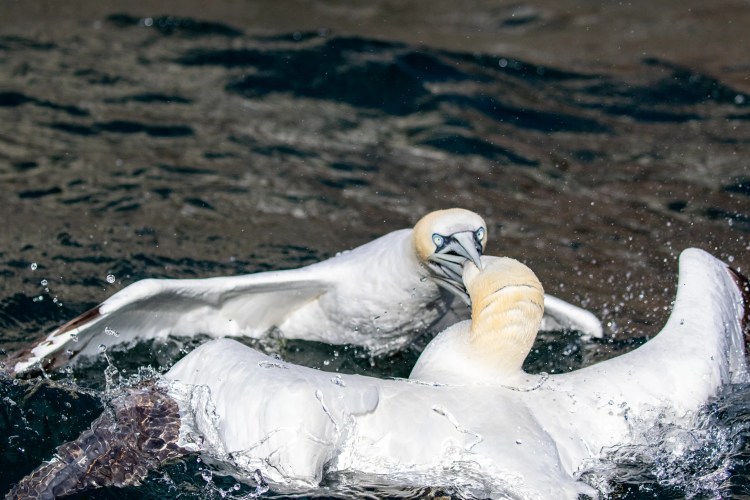
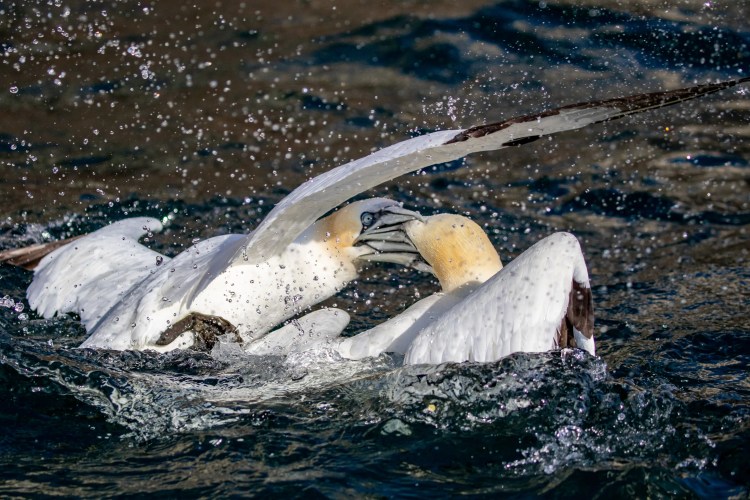
As our boat approach the Gannets stopped fighting each other to get away from us and I felt we effectively broke up the contest. This was probably good news for the weaker bird.
As we left the Island we again saw countless Gannets leaving the rock going out to the fishing grounds across the North Sea.
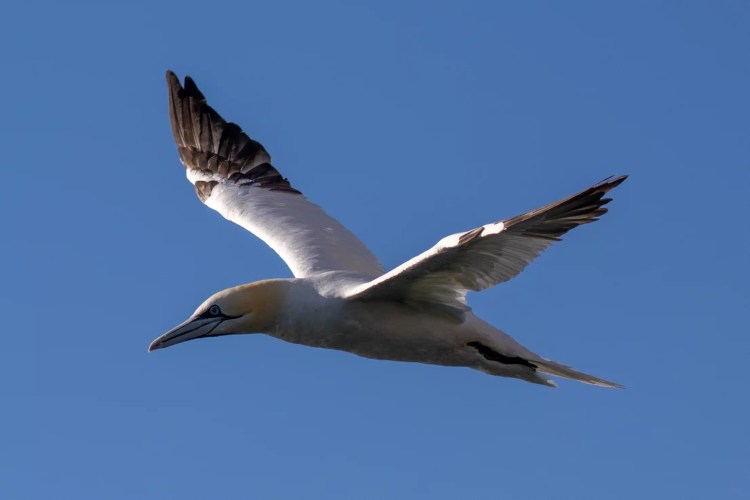
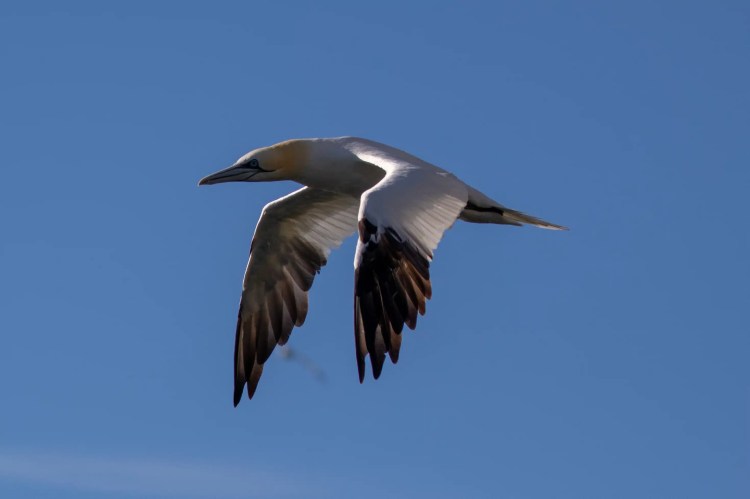
A magnificent bird and great experience. Recommend a visit.

Discover more from WildScot®
Subscribe to get the latest posts sent to your email.